Author: elizabethmeganburton

  • 10 Fictional Books About Grief by Women Who Lived Through It 

    10 Fictional Books About Grief by Women Who Lived Through It 

    In many cultures, grief is named and sidestepped rather than explored and respected. But, whether in Toni Morrison’s Beloved or The Gathering by Anne Enright, the following books show that grief never truly leaves us; instead, it burrows inside, emerging in big and small ways throughout our lives. In this way, grief has an inherent duality.

    It explodes and erodes. It is lament and lacuna, relief and resentment. It is visceral and fugitive. It is shadow and spotlight. Grief can be both burden and revelation, as many of the authors below illustrate. We hope these books help you carry your own grief in a way that respects the uniqueness of that experience, neither forcing pain to the surface nor burying it further inside. 

    The Mounting Grief of Loss in Womanhood

    A poster for the Loss and Grief symposium led by the OMS and National Institutes of Health, 20th century 

    Grief is a universal experience, but the grieving process does not unfold the same way for everyone. A 2020 study in the Journal of Psychiatric Research reveals (un)surprising differences in how men and women navigate significant loss. It suggests that men tend to experience an acute reaction; they feel immediate devastation after the sudden death of a loved one, but these feelings gradually decrease in the weeks and months that follow.

    Many women, however, bear their own grief much differently: their grief may feel less dramatic initially, but it intensifies and lingers over time. Instead of receding as months pass, it only grows. This “mounting grief” is reflected in many of the best books about grief written by women, in which authors process heartbreak that becomes an enduring part of their female characters rather than an isolated experience. 

    The Burden of Responsibility 

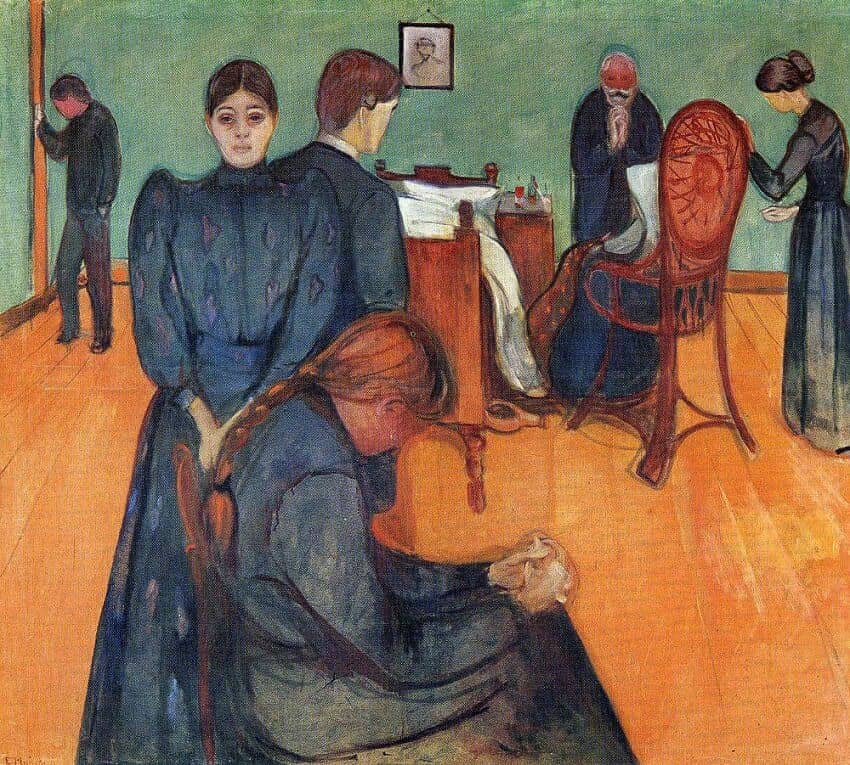
    Death and the Child, Edvard Munch, 1889, Oil on canvas, Kunsthalle Bremen, Bremen 

    Part of this difference comes from the unique challenges women face when mourning. Many women must deal with their grief while caring for children, siblings, or aging parents. Even as they are overcome by sorrow and feel overwhelmed, they may continue to be the emotional center of their families; in this role, they are expected to provide practical advice, offer support, and provide comfort for others while falling apart themselves. 

    This dual role complicates the healing journey for many women; the mourner must balance her personal anguish with her “duty” of sustaining life for others. Novels written out of women’s own

    experiences capture this reality; they echo the fact that dealing with grief is never linear, especially when it is tangled up with caregiving. 

    How Art Captures Women’s Grief 

    Lucretia (one of three), oil on canvas, Artemisia Gentileschi, 1627 

    Despite these lived realities and a growing body of research, cultural portrayals of grief repeatedly flatten or distort women’s experiences. In film and television, women’s mourning is often reduced to wailing at funerals. Their bodies collapse in despair, their hands knot and writhe, mascara-tipped tears fall from their eyes in torrents. Alternatively, men are shown as stoic, resolute, and solemn. 

    This trope obscures the truth and actually reverses what science has found to be true: women’s grief is rarely a theatrical outpouring of sorrow and men’s grief is not always silent or quickly resolved as such portrayals suggest. Women’s grief is not tidy, either. It can be angry,

    messy, violent, and self-destructive; less romantic mascara lines across the cheeks and more empty liquor bottles and stained bedsheets littered on the floor. 

    *above will be embedded 

    To illustrate that reality, we turn to art and literature by women. Art created by women (like Tracey Emin’s My Bed or Frida Kahlo’s Henry Ford Hospital) depicts grief and loss as raw and bodied. Literature written by women also resists the clichés outlined above; writers like Carol Shields and Maggie O’Farrell meditate on the complexity, duration, and layered responsibilities of their characters’ grief. 

    The following books accurately portray how women confront devastating loss, not only of partners, but of children as in Hamnet, of parents as in Everything I Never Told You, and of their own sense of self as in The Stone Diaries. Toni Morrison’s Beloved turns mourning into mythology as she shows how a mother’s grief can be both private and intergenerational. While best known for her deeply personal memoir The Year of Magical Thinking, Joan Didion explores similar territory in fiction like Play It As It Lays, where she writes about dislocation and psychic pain. 

    Grief as Erosion, Not Explosion

    Patience on a monument smiling at Grief, John Roddam Spencer Stanhope (English, 1829 – 1908) 

    The difference, then, is not about who hurts more, but about the texture and timeline of one’s grief. Men’s mourning may be compared to a storm: violent, visible, then passing. Women’s grief is often better compared to erosion: subtle, relentless, reshaping the landscape of their lives long after others expect them to be “done.” 

    From Morrison to Enright and from Shields to O’Farrell, literature insists that grief is less something to overcome and more something to integrate. It remakes the self. And it rewrites relationships. The following books are resources for both adults and children, for siblings, parents, and friends, because they show that grief is not only personal but also relational. 

    In this way, the mounting grief of womanhood is a lesson and a reflection; mourning is not weakness and the refusal to “move on” is not failure. But it shouldn’t be seen solely as a vehicle for personal growth, either. These books might demonstrate the universality of grief, but they also show how deeply individual it is, how fractured it can be, and how nonlinear healing feels.

    We encourage you to explore books like Beloved, Runaway, and The Gathering after reading this article. They might not include practical strategies for healing or daily meditations on the complexities of grief, but they do provide context and comfort. 

    10 Fictional Books About Grief by Women Who Lived Through It 

    Beloved by Toni Morrison 

    In this Pulitzer-winning novel by Toni Morrison, Sethe kills her baby daughter rather than see her enslaved, but the child comes back in the form of Beloved after her spirit is forced from their haunted home. Inspired by an account from 1856, the grief in this story is fierce and layered; Sethe (who herself was horrifically abused) mourns her child, but she also mourns her own stolen life and the lives of generations before her.

    Over time, Beloved grows larger and larger, fed by Sethe’s guilt-fueled dedication to the young woman. Even as memory of Beloved fades from collective memory in their town, Morrison chronicles how a mother’s sorrow, trauma, and heartbreak lives on in the body and in her own memory. This kind of somatic grief often intensifies (or at the very least, changes shape) with time. It is all-consuming and unending. 

    The Stone Diaries by Carol Shields 

    In this novel by Carol Shields, Daisy Goodwill grows up without her mother, who dies in childbirth. Daisy then lives much of her life in obscurity. Long after her mother dies, she endures the death of her husband and her fading sense of self, which debilitates her over time. 

    Shields traces how loss threads itself through Daisy’s life; her grief is never depicted as a sudden, soul-shattering moment but rather as an undercurrent that slowly shapes who she becomes. This novel makes space for small ways in which grief appears across domestic life.

    Here, mourning is not centered on a single devastating event; for her, it is a lifetime of absences. 

    Runaway by Alice Munro 

    In this collection by Alice Munro, women live with the grief wrought by abandonment, estrangement, and regret. Children leave home, marriages dissolve, and unrealized possibility dissipates before it can be realized. These stories capture loss not as spectacle but as something that settles slowly into daily life. 

    Munro shows how women continue moving through ordinary routines while carrying unbearable sorrow with no clear outlet (or outline). Some characters turn away from their feelings, while

    others allow themselves to remember and even revel. In either case, grief lingers and shapes the choices Munro’s characters make. 

    The Gathering by Anne Enright 

    In Anne Enright’s novel, Veronica Hegarty travels to Dublin after her brother Liam commits suicide. His death forces her to confront the unaddressed fractures and growing silence that have long haunted their family. Here, grief is equally yoked with anger and unease. 

    Veronica shoulders the weight of holding her family together while privately unraveling. Enright makes visible the hidden burden women often bear in mourning: to soothe others, to tell the story, to carry both memory and responsibility without letting it slip beyond themselves.

    Everything I Never Told You by Celeste Ng 

    Celeste Ng’s novel opens with the sudden death of Lydia Lee, favored daughter of a Chinese American family in 1970s Ohio. The nature of her death is not revealed until much later in the novel. Her mother Marilyn is irreparably undone by the loss, yet her grief is complicated by the expectations she placed on her daughter. 

    This novel reveals how silence magnifies sorrow and compounds loss. Marilyn aches for the life she wanted for Lydia, while the rest of the family falters under the weight of what has never been said. Ng illustrates how grief can expose every fracture within a household and how mothers, in particular, lie on the sharpest edges of those fractures while trying to desperately to glue them back together. 

    Hamnet by Maggie O’Farrell

    In Hamnet, Maggie O’Farrell reimagines the death of Shakespeare’s young son through the eyes of his mother, Agnes Hathaway who is surprisingly wild and bold. After the shocking death of her son, Agnes feels the boy’s absence in her bones; her mourning is the spine, muscle, and marrow of this book. 

    O’Farrell writes much from her own brush with death and that closeness to the subject shapes the intensity of her portrayal. She renders the grief of a mother losing a child as both physical and spiritual, something that stretches across time and transforms every relationship it touches. 

    Critics have described Hamnet as “a luminous portrait of a marriage, a family ravaged by grief.”

    The Dark Flood Rises by Margaret Drabble

    Margaret Drabble’s novel follows Fran, who is an older woman moving through the cumulative losses that come with age. She attends funerals, witnesses the decline of others she holds dear, and lives with the knowledge that her own mortality is inevitable (and likely near). In Drabble’s novel, grief is an ordinary part of life. 

    The book does not dwell on widowhood alone but on how women face loss in solitude. Fran resists dependence on others, even as she feels the world narrowing around her. Again, grief is portrayed not as a single shocking event but as a continuum. It grows as we do. 

    Still, Fran finds the beauty and humor in life, even amid meditations on her own mortality. In The Dark Flood Rises, she opines, “Old age, it’s a fucking disaster!” 

    The Death of the Heart by Elizabeth Bowen

    Elizabeth Bowen’s novel tells the story of sixteen-year-old Portia, who discovers betrayal in her household years after severe loss in her childhood. Instead of a dear relative or romantic partner, she loses her innocence and trust. The grief that follows is quiet but all-consuming. 

    Bowen wrote out of her own experiences of loss and her prose carries that. Portia’s sorrow is less about sudden death than it is about the collapse of safety she though inherent to being part of a family. Here, grief is tied to betrayal and the unfairness of misplaced trust. 

    Bowen shows how disillusionment can feel as devastating as bereavement, particularly for a young woman who believed family could be a refuge after losing those closest to her (her father and mother) at an early age. 

    The Almost Moon by Alice Sebold

    In Alice Sebold’s novel, Helen kills her elderly mother after years of tension and care. The act forces her to reckon with a lifetime of estrangement. What follows is grief tangled messily with guilt, anger, and unwanted devotion, emotions many of us feel after complex, conflicting loss. 

    Being a caregiver is never solely about love; it starts that way, but often devolves into resentment, frustration, and longing for a simpler life with softer boundaries. 

    Herself a survivor of violence, Sebold writes bluntly without sentimentality. Helen’s mourning is not tender or redemptive; it is complicated and harsh. It exposes the realities of caring for someone out of obligation rather than adoration. The novel explores what it means to grieve a parent one could never fully love. 

    Many of us are familiar with the anger that comes when a parent, partner, sibling, or friend is “deified” after death. Helen feels anger not just at her mother, but at the way death immediately rewrites her mother’s story. It sands away the uglier, grittier parts that defined their relationship and eroded Helen’s sense of self. Sebold doesn’t soften this but instead shows how grief is tangled with fury when the dead are sanctified.

    The Lover by Marguerite Duras 

    Marguerite Duras’s The Lover is based on her own adolescence in French colonial Vietnam and is not strictly a novel about bereavement, but it explores these themes nonetheless. It illustrates how grief bleeds into many other emotions. 

    In this book, a young girl enters an affair with an older Chinese man who is quite wealthy. While this affair is central to Duras’ novel, the main character’s deepest pain lies in estrangement from her unstable mother, her brother’s cruelty, and her family’s decline during her absence. 

    Harshly dislocated from her family, the young narrator feels both estranged from her home and bound to it. Like others on this list, Duras depicts grief that arrives not in a single, deafening blow but in the accumulation of disappointments and separations that percolate over years or even decades. Her novel shows how a young woman grieves for family, for country, and for a

    life that could not be lived. The New York Times Book Review described her prose as “powerful, authentic…perfect.” 

    If You Are Struggling with Grief, Please Consult These Resources 

    The Widow I (1922–23), woodcut from the Mario de Andrade Collection, Käthe Kollwitz, at the Instituto de Estudos Brasileiros 

    If you are coping with grief right now, please know that support is available. Grief can feel overwhelming and unending, but you do not have to carry it alone. The following organizations and hotlines can offer you immediate help and ongoing guidance as you navigate the pain of losing a loved one. 

    National Alliance for Grieving Children (NAGC) 

    The Dougy Center

    National Alliance on Mental Illness (NAMI) Helpline (call 1-800-950-NAMI (6264)) ● 988 Suicide & Crisis Lifeline (U.S.) (dial 988) 

    Hospice Foundation of America 

    The Compassionate Friends 

    GriefShare 

    Grief may feel isolating, but you are not alone. Finding support, whether through community groups, therapists, or a crisis line, is never a sign of weakness. 

    A Note from The Somatic Diary 

    At The Somatic Diary, we have found reading books to be a surprisingly effective way to process trauma and grief; they have become part of our healing process. This may be because literature allows people to witness their own experiences reflected back to them. 

    The books outlined above navigate and excavate emotions that may otherwise feel overwhelming or unspeakable: shame, anger, hatred, hopelessness, relief, regret… We hope you find some comfort in the many manifestations of grief described by these incredible writers.

  • Medical Gaslighting & the Horrible History of Women’s Healthcare

    Medical Gaslighting & the Horrible History of Women’s Healthcare

    Women have always known when something was wrong with their bodies. But for centuries, they’ve been told otherwise—by healthcare professionals, priests, scientists, and husbands. Pain was not pain; it was hysteria. Bleeding was not a symptom; it was punishment. Fatigue, swelling, breathlessness, confusion—none evidence of illness but of weakness, neurosis, lust.

    The history of women’s healthcare is no well-intentioned climb toward omnipotence. It is an incomplete archive of dismissal, distortion, and outright violence. From ancient Greeks who believed the uterus wandered like a wild animal to 19th-century asylum doors that opened a little too easily for wives with opinions to modern exam rooms where women are still told their pain is “normal”—the throughline is mistrust, not benign misunderstanding.

    As we trace the history of medical gaslighting (by the healthcare system, by our loved ones, and by our cultures), we encourage you to remember that this is not about bad science. It is about power. It is about who is believed and who isn’t. It is about how medicine—so often billed as “neutral”—has followed a cultural script, reinforcing who is seen as credible, coherent, and deserving of care.

    Medical gaslighting is not new, but we’re naming it. And that is new.

    What is Medical Gaslighting?

    Jean-Martin Charcot Series inspired by French neurologist Jean Martin Charcot studies in Neurosis.
    Jean-Martin Charcot Series of photographs from 1878, inspired by his studies in Neurosis.

    Medical gaslighting (also called “medical invalidation”) happens when medical professionals dismiss or minimize a patient’s symptoms and attribute them to anxiety, stress, or a mental health condition instead. This is often done without adequate testing, follow-up, or consideration of the patient’s own experience. It leaves patients—especially women, Black patients, and those from other marginalized groups—feeling unheard, invalidated, misdiagnosed, and without important medical care.

    This isn’t limited to one bad doctor or one rushed medical appointment. It’s rooted in a larger healthcare system shaped by medical bias, limited time, and long-standing gaps in medical research. As you might imagine, we see medical gaslighting happen more frequently in relation to women’s health, chronic illness, and mental health. As Harvard Medical School researchers have noted, even when men and women present with the same symptoms, women are more likely to receive a diagnosis of a mental health condition, be prescribed less pain medication, or have their health concerns labeled as “stress-related.”

    Classic examples of gaslighting in the medical system include women with IBD (inflammatory bowel disease) or IBS (irritable bowel syndrome) being told their pain is “in their head” or patients with long COVID, chronic pain, or mental illness being passed between specialists with no clear treatment. Those who rush to the emergency department with horrifying symptoms and unimaginable pain might be dismissed as “drug seeking” by health care professionals. Gaslighting is often associated with worse medical outcomes—especially in women.

    You may be experiencing medical gaslighting if…

    • Your symptoms are consistently dismissed without explanation.
    • A physician tells you your test results are “normal” but you still feel unwell.
    • You are not offered modern medical testing or appropriate referrals.
    • You’re told to “reduce stress” or “get more sleep” as a catch-all treatment.
    • You leave appointments feeling like you weren’t taken seriously.

    The power differential between patient and provider can make it hard to spot medical gaslighting, but there are ways to protect yourself.

    How to Protect Yourself from Medical Gaslighting

    • Bring a trusted friend or family member to appointments.
    • Write down your own experiences, symptoms, and questions in advance.
    • Don’t hesitate to seek a second opinion—many patients need to advocate for themselves to receive quality care.
    • Trust your own body. You deserve to feel heard.

    Medical gaslighting is incredibly frustrating in the short-term but it can also have serious, lifelong consequences. Gaslighting can lead to worse health outcomes, delayed diagnoses, and improper or missed treatment. Recognizing that you have not received adequate care when you should have is your first step toward reclaiming self care, advocating for proper treatment, and demanding a more equitable health care system for all of us.

    But this isn’t all on you.

    Monsters, Myths, and Medical Men: Tracing the Timeline of Gaslighting in Women’s Healthcare

    The Original Misdiagnosis of the Wandering Womb

    Anatomical illustration of the inside of the uterus, fallopian tube and ovaries (1672) Hendrik Bary (Dutch, 1632 – 1707)
    Anatomical illustration of the inside of the uterus, fallopian tube and ovaries from 1672, by Hendrik Bary

    Between the 5th Century BCE and the 4th Century CE, Western medicine did women few favors. The ancient Greeks believed the uterus was not an organ, but a creature. This create was unmoored, mobile, and hungry. According to Hippocratic theory, it could travel through a woman’s body, suffocating her organs, clouding her mind, and producing symptoms of madness. The solution? Scent therapy, sex, or marriage—tools meant to pacify the womb, not the woman.

    This was not diagnosis. It was containment disguised as care.

    The myth of the “wandering womb” is perhaps the earliest recorded instance of what we now call medical gaslighting, which you now know is when healthcare professionals translate a woman’s symptoms not as evidence of disease, but as proof of her instability, sexuality, or sin.

    As Mary Lefkowitz wrote for The New Yorker back in 1996, “A woman who was unwell was said to be ‘womby.” Has much changed? Lefkowitz argues not. “Even today, when wombs have stopped wandering, medicine tends to pathologize the vagaries of the female reproductive system, from menarche to menopause.”

    Not our bodies, not ourselves?

    By the time Roman physicians like Soranus began writing gynecological texts, women’s bodies were already categorized by deficiency. Soranus, often considered progressive for his time, advised against overmedicating, yet still treated women almost exclusively through the lens of fertility. A woman’s body was not her own; it was a vessel, a womb, a means to an end, and nothing more.

    Pain without pregnancy was often invisible. Illness without male distress was rarely real.

    The Age of Authority and Asylums

    Mary Wollstonecraft in 1797
    A portrait of Mary Wollstonecraft in 1797

    Skipping ahead to the 18th century, we find ourselves face to face with Mary Wollstonecraft. Mary Wollstonecraft’s manifesto called for our access to education while ferociously rebuking the systems that kept women silenced, including medicine.

    During this time period, male physicians routinely framed female intellect as a liability and female illness as emotional excess. Contrarily, Wollstonecraft issued a radical claim that angered her male counterparts: perhaps women were not weak but deliberately weakened.

    Ignaz Semmelweis and the Unwashed Hands of Medicine

    Decades later in 1847, Semmelweis observed a deadly pattern: women giving birth in physician-run hospitals were dying at alarming rates from childbed fever. The cause of these mass deaths was doctors moving directly from autopsies to deliveries without washing their hands. Semmelweis’ solution (basic hand hygiene), was dismissed as offensive, unscientific, even hysterical. While he did eventually implement chlorine hand-washing in one hospital, his 1861 book was ripped apart.

    He died in an asylum. The women he tried to save died in droves.

    Medical gaslighting doesn’t always look like disbelief in women’s symptoms. Sometimes, it is the refusal to take action when those symptoms are common, inconvenient, or coming from the “wrong” source.

    The Father of Gynecology and the Mothers He Ignored

    Agnew Clinic by Thomas Eakins (depicts Dr. Agnew in an operating theater performing a mastectomy, not Dr. Sims), Oil on Canvas, 1889

    We often praise 19th century doctor J. Marion Sims as a pioneer of gynecology. Less often mentioned is how he built that legacy: through painful surgical experiments performed on enslaved Black women without anesthesia or consent. Their names—Anarcha, Lucy, and Betsey—are remembered by few, but they are the true founders of the field.

    Medicine’s advancements have often been paved with the suffering of those deemed expendable (women, Black patients, poor patients), whose pain was either normalized or invisible.

    Hysteria, the “Rest Cure,” and the Architecture of Silence

    undefined
    Series of three photos showing a hysterical yawning woman, c.1890, by Albert Londe, Courtesy of the Wellcome Collection, Licensed under CC BY 4.0.

    As women began speaking more boldly—demanding rights, education, autonomy—medical professionals responded with a new diagnosis: hysteria. It could explain everything and nothing. Melancholy, ambition, sexuality, exhaustion, imagination—all were signs of feminine dysfunction.

    The prescription was “the rest cure:” total isolation, no stimulation, no writing, no conversation.

    Many of us are familiar with Charlotte Perkins Gilman’s The Yellow Wallpaper from 1892, which is much more of a case study than a fictional tale. Written after Gilman herself was prescribed the rest cure, it exposes the insidious way medical care fails us. The unnamed narrator’s descent into madness is not caused by illness but by the very health care system designed to “treat” her.

    Progress, at What Cost?

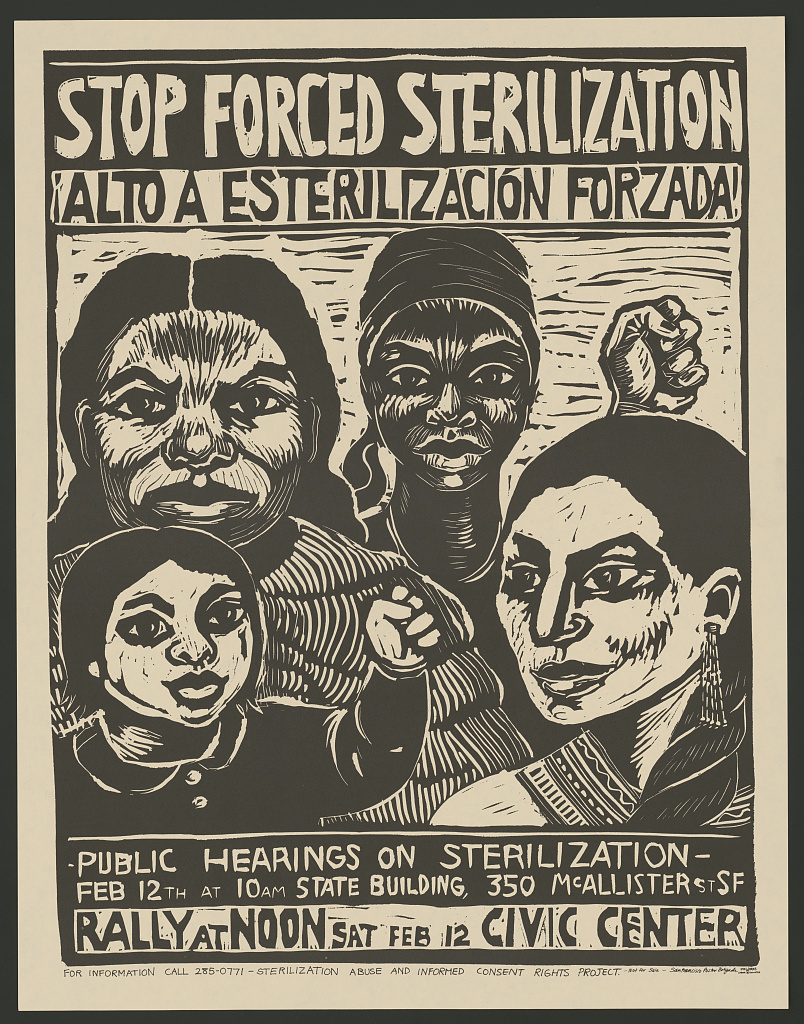
    poster by Rachael Romero from 1977
    “Stop Forced Sterilization” (1977), poster by Rachael Romero, San Francisco Poster Brigade, Courtesy of the Library of Congress, Prints and Photographs Division, digital ID ppmsca.43321, Public domain in the United States.

    Under the banner of eugenics between the 1900s and 1930s, the U.S. forcibly sterilized over 60,000 people, primarily women of color, poor women, and disabled individuals, without consent. These procedures were framed as public good, even though we now see them for what they were: violation, maiming, and assault.

    Women were experimented on, yet routinely left out of medical testing.

    Just a couple decades later between the 1940s and ’60s, Thalidomide was marketed as a mild sedative and anti-nausea drug for pregnant women but caused thousands of birth defects worldwide. The scandal exposed what many already knew: modern medical testing rarely included women. Their own bodies were considered too “complicated” for clean data. The fallout was devastating and predictable.

    Women were misinformed and minimized.

    Around the same time, contraception became available to women. Often celebrated as a feminist breakthrough, the pill’s early trials paint a much bleaker picture. On the ground in Puerto Rico, poor women were recruited—often without full disclosure—and given experimental doses that caused severe side effects. Many healthcare professionals ignored or downplayed their reactions. There was no protocol for informed consent—only urgency to test.

    And in the 1980s, Diethylstilbestrol (DES), prescribed to “prevent miscarriage,” harmed two generations. The drug caused cancer, infertility, and birth defects. Again, it was marketed as safe. Women’s concerns were ignored until the damage was irreversible.

    The Price of Disobedience in Mid-Century and Postmodern Media

    the movie poster for Girl, Interrupted

    Over the last thirty years, we have reflected on medical gaslighting in film and on television. From Girl, Interrupted to The Crown, instances of medical maltreatment are endless. Cultural narratives mirrored real-life violations.

    In Girl, Interrupted (set in 1967–68), young women are institutionalized and overmedicated for nonconformity. In Mad Men, Betty Draper’s depression is treated as an inconvenience. In The Crown, Princess Margaret’s struggles are sedated rather than understood.

    These fictional portrayals echo a healthcare system that pathologized female emotion, autonomy, and illness while offering little in the way of proper treatment.

    Present Day: The Pain Is Real—Are We Listening Yet?

    Medical gaslighting persists, especially for Black patients, trans folks, women with “invisible” illnesses, and anyone outside the narrow model of the “ideal” patient. The maternal mortality crisis in the U.S. continues to produce worse health outcomes for women, especially women of color.

    Long-dismissed conditions like PCOS, endometriosis, and long COVID are finally receiving attention, thanks to women-led advocacy and the democratizing power of social media. But medical understanding is still limited and treatments remain stuck in the past as funding is funneled elsewhere.

    Educate Yourself. Advocate for Yourself.

    a book by Maya Dusenbery featuring a pill on the cover

    If you need more information (and we’re sure you do), below are a few resources that might help. First, Maya Dusenbery’s Doing Harm investigates how bias in the medical system leads to worse health outcomes for women. Her words (and careful research) are incredibly validating. Barbara Ehrenreich and Deirdre English’s For Her Own Good traces two centuries of medical and cultural control over women’s bodies.

    a book by Ehrenreich about medical gaslighting by medical professionals; she also discusses how to avoid medical gaslighting

    Online communities like The Endometriosis Foundation of America, IWeigh’s health advocacy work, and hashtags like #MedicalGaslighting can connect you with other women experiencing similar health struggles and the dismissal that often accompanies them. Find support on Reddit and other forums if you can. For more clinical guidance, Harvard Health Publishing and Emergency Medicine News have finally started addressing these systemic issues in women’s health.

    You are not imagining this. And you are not alone. But remember:

    “Your silence will not protect you.”

    —Audre Lorde

    The featured image for this post is A Clinical Lesson at the Salpêtrière by Pierre Aristide André Brouillet.

  • How the Three Types of Somatic Therapy Address Trauma Held in the Body

    How the Three Types of Somatic Therapy Address Trauma Held in the Body

    You wake up tired despite a full night’s sleep. Your chest tightens in crowded rooms. A simple everyday sound—laughter, footsteps, a door slamming—feels like a physical threat. You have worked through the memories, cognitive distortions, and behaviors produced by them in talk therapy, so why does your body still flinch? Why are you still on edge?

    Trauma doesn’t live solely in the mind. It nests in the body—in tight shoulders, shallow breath, and clenched jaws. It presents as chronic pain. While talk therapy is effective, it rarely addresses the ways in which trauma physically manifests itself. But somatic therapy addresses the mind-body connection.

    Why the Body Matters in Healing

    the human nervous system, which is relevant to somatic psychotherapy
    Quanta neruorum tabula. [Human Nervous system] (1545), Thomas Geminus (Flemish, 1510 – 1562), Illustration

    A body-centered approach to mental health, somatic therapy recognizes what traditional talk therapy sometimes overlooks: that trauma is also physiological. A traumatic event doesn’t only shape how we think but also how our bodies react, how our nervous system operates, and how we experience physical sensations like pain, tightness, or dissociation. As Harvard Health explains, “the body keeps the score.”

    Unlike cognitive approaches that focus solely on thought patterns, somatic trauma therapy helps us listen to and release what the body remembers. Quoting therapist Amanda Baker in this article, Maureen Salamon writes that “somatic therapies posit that our body holds and expresses experiences and emotions, and traumatic events or unresolved emotional issues can become ‘trapped’ inside.”

    From tension patterns to traumatic stress responses like fight, flight, or freeze, somatic therapy techniques restore balance and reconnect us to the present moment. While talk therapy offers insight, somatic therapy is more rooted in embodiment. 

    The 3 Types of Somatic Therapy

    There are many types of somatic therapy, but three are better established and more research-supported than the rest: Somatic Experiencing, Sensorimotor Psychotherapy, and the Hakomi Method. Each helps women recover from trauma symptoms by honoring the body’s role in healing but does so in different ways.

    Somatic Experiencing

    Most people will first reference somatic experiencing when discussing body-based trauma therapy. Developed by Dr. Peter Levine, Somatic Experiencing therapy focuses on completing what he calls the “interrupted stress cycles” of trauma.

    When a person experiences a traumatic event, the nervous system can become stuck in survival mode, a repetitive fight, flight, or freeze cycle. SE helps gently guide individuals out of that “stuckness.” SE uses titration, meaning it works with very small pieces of trauma at a time to avoid overwhelm. It also encourages pendulation, which is gently moving between states of distress and safety to build regulation capacity.

    As Theodora Blanchfield writes in an article for Very Well Mind, “Somatic experiencing practitioners use a framework known as SIBAM (Sensation, Imagery, Behavior, Affect, and Meaning) to help clients incorporate their bodies in processing trauma.” Sessions might include tracking body sensations, noticing shifts in breath or posture, or subtly reenacting a movement that was never completed. 

    This approach is especially helpful for post traumatic stress disorder (PTSD symptoms), chronic stress, and trauma that hasn’t responded to traditional talk therapy. A somatic therapist trained in SE will often combine these techniques with tools like breathing exercises, grounding, or eye movement desensitization (EMDR somatic therapy), depending on the client’s needs.

    Sensorimotor Psychotherapy

    Sensorimotor Psychotherapy is a body-based talk therapy developed by Dr. Pat Ogden in the 1970s. It combines traditional psychotherapy with somatic awareness to treat trauma held in the body, especially dissociative symptoms like numbness, shutdown, or motor inhibition.

    Rather than focusing on analyzing narratives, this method encourages clients to notice what’s happening physically as they recall distressing events. Body awareness and identification of physical symptoms tied to emotional pain is key to Sensorimotor Psychotherapy. A therapist might ask, “Where do you feel that in your body?” Through slow, mindful attention, they then help their client explore incomplete movements, which could be impulses that were suppressed during a traumatic event.

    By completing these gestures in a safe, guided way, the body can reach a “resolution.” Sensorimotor therapy is especially effective for developmental trauma and posttraumatic stress disorder symptoms rooted in early attachment wounds. As Dr. Robert T. Muller writes in an article for Psychology Today, clients commonly address “maternal lack of attunement, as well as acute or gross trauma like sexual abuse, violence, or verbal abuse” through Sensorimotor Psychotherapy. This method is collaborative and consent-driven, which can be empowering for clients who have experienced similar types of trauma.

    The Hakomi Method

    the Hakomi method is based partially on Taoist teachings by Qui Chuji; it is a body centered therapy that focuses on processing negative emotions through assessment of bodily sensations.
    Taoist master Qiu Chuji (1503), drawn by Guo Xu and included in ‘Immortal Qiu’: Telling Images of China.

    The Hakomi Method is a mindfulness-based somatic therapy created by Ron Kurtz in the late 1970s. It combines principles from Eastern philosophies like Buddhism and Taoism with Western body psychotherapy and systems theory. The Hakomi method is based on several principles, including mindfulness, organicity, unity, body-mind holism, nonviolence, mutability, and truth. The first five were established by Kurtz, while the latter two are sometimes added by other practitioners. 

    Hakomi places clients in a calm, present-moment state where they can access the unconscious beliefs their bodies have carried. Similar in some ways to Sensorimotor Psychotherapy, the Hakomi Method addresses beliefs often formed through early attachment wounds or developmental trauma.

    Rather than analyzing or challenging these beliefs directly, Hakomi therapists create gentle “experiments” to surface them. A therapist might ask, “What happens inside when you hear the words, ‘You are safe here’?” and then guide the client to identify the body’s response. This process reveals unconscious organizing beliefs that shape how the client experiences the world and responds to it.

    Sessions are experiential rather than purely verbal. While talk therapy seeks insight, Hakomi seeks transformation through felt experience. It’s particularly helpful for those with relational trauma or unconscious defenses rooted in physical holding patterns. According to the Hakomi Institute, this approach focuses on “providing the missing experience,” one the body needed but never received.

    What Happens During Somatic Therapy Sessions

    Whether Somatic Experiencing, Sensorimotor Psychotherapy, Hakomi, or another type of somatic therapy, what makes these sessions different from traditional talk therapy is that they work with the body, not just the mind. This means the therapist helps you tune into how you’re feeling physically, not just what you’re thinking or saying. A somatic therapy session may proceed as follows.

    Grounding and Orienting to the Body

    These sessions usually start with slowing down. You may be asked to take a breath, feel your feet on the ground, or scan your body for physical sensations like tension, heat, shakiness, numbness, tightness, or movement impulses. This anchors you in the present moment, which is central to most somatic practices.

    Tracking Sensations and Emotions

    Next, the therapist will help you stay with those physical manifestations to observe them. You might notice your stomach clenching when you recall a traumatic event or that your throat tightens when you talk about a relationship. This is a part of somatic therapy called “interoception.”

    Noticing and Completing “Unfinished” Responses

    Much of somatic therapy involves helping the body complete trauma responses that were frozen or shut down. Your therapist might help you explore a physical impulse like reaching out, turning your head, bracing your hands and slowly act it out in a safe, contained way.

    In Somatic Experiencing, this is called “completing the cycle.” In Sensorimotor Psychotherapy, it might be called “restoring motor responses.” In Hakomi, it could be part of a mindfulness-based “experiment.”

    Regulation and Integration

    Once you have explored and perhaps released some of this stored energy, the therapist helps you return to baseline through breathing exercises, gentle movement, visualization, or simply noticing how your body feels now compared to the beginning of the session.

    How to Know Which Somatic Therapy Might Fit You

    a woman hovers above an old man, used in this article to symbolize somatic psychology
    Vision (Memory), 1900, Teodor Axentowicz (Polish, 1859–1938)

    Finding the right somatic therapy is less about choosing the “best” method overall and more about choosing the one that resonates most deeply with how your body and mind process trauma. If you feel stuck in stress responses (panic, shutdown, hyper-vigilance), Somatic Experiencing may help release trauma in gentle, nonverbal ways.

    If your trauma presents in emotional dysregulation or physical pain without clear memories, Sensorimotor Psychotherapy could help bridge that gap. Last but not least, if you’re interested in the unconscious beliefs behind your trauma responses, the Hakomi Method helps you tease those out.

    Resources for Finding Support

    Traumatic experiences need not live forever in your body. If you’re interested in working with somatic therapists trained in body psychotherapy or experiential dynamic psychotherapy, you can visit the following resources.

  • 10 Books That Reframe Menopause in Cultural Context

    10 Books That Reframe Menopause in Cultural Context

    In Western culture, we see menopause as an ending. It arrives not with reverence but with euphemism, clinical dread, or silence—a slow erasure wrapped in hot flashes and unkind jokes about uncontrollable mood swings. But like all life thresholds, menopause is multifaceted—neither wholly psychological nor entirely physical. It is biography, biology, and belief. It is medicine. It is myth. It is a nexus of power, aging, identity, and rage.

    The books below do not explain menopause in a clinical sense, but they do reframe it. They interrogate the structures that turned it into a punchline, reimagine it as metamorphosis, and invite us to reinterpret what it means—culturally, spiritually, politically—to inhabit a body that no longer conforms to the (not-so-reliable) rhythms it once did. Yes, they address menopause symptoms like weight gain and waning estrogen, but they also re-contextualize women’s health at—and beyond—this crucial juncture.

    Whether through memoir, manifesto, fiction, or anthropology, these ten works resist our cultural inclination to flatten menopause. They insist that menopause is not the death of youth, but a fresh chapter of womanhood.

    10 Books That Reframe Menopause in Cultural Context

    The Slow Moon Climbs: The Science, History, and Meaning of Menopause by Susan Mattern

    The first menopause book on this list is The Slow Moon Climbs. Countering the pathology and pity that frequently defines coverage of this subject, Mattern’s voice is clear and corrective. A medical historian by training, she dismantles the “decline narrative” with precision and scope.

    Mattern argues that menopause is not an evolutionary fluke but a biological and social asset. Her writing is lucid, quietly persuasive, and steeped in global anthropology. By tracing menopause through centuries of human development and across cultures—from ancient China to contemporary Western medicine—Mattern reframes it as a meaningful adaptation rather than a malfunction.

    Readers will find no recipes, hormone therapy recommendations, or symptom trackers here, but they may step away with something rarer: relief. Nothing about this transition is unnatural. We were never meant to navigate menopause in shame or isolation.

    How Mattern Reframes Menopause

    Rather than offering practical advice on managing symptoms or presenting studies on women’s hormonal health, Mattern gives readers historical context, intellectual clarity, and cultural validation. Her work grants women permission to locate themselves within a longer lineage, one in which the aging female body is not in decline, but in continuity with generations of women whose bodies were never the problem.

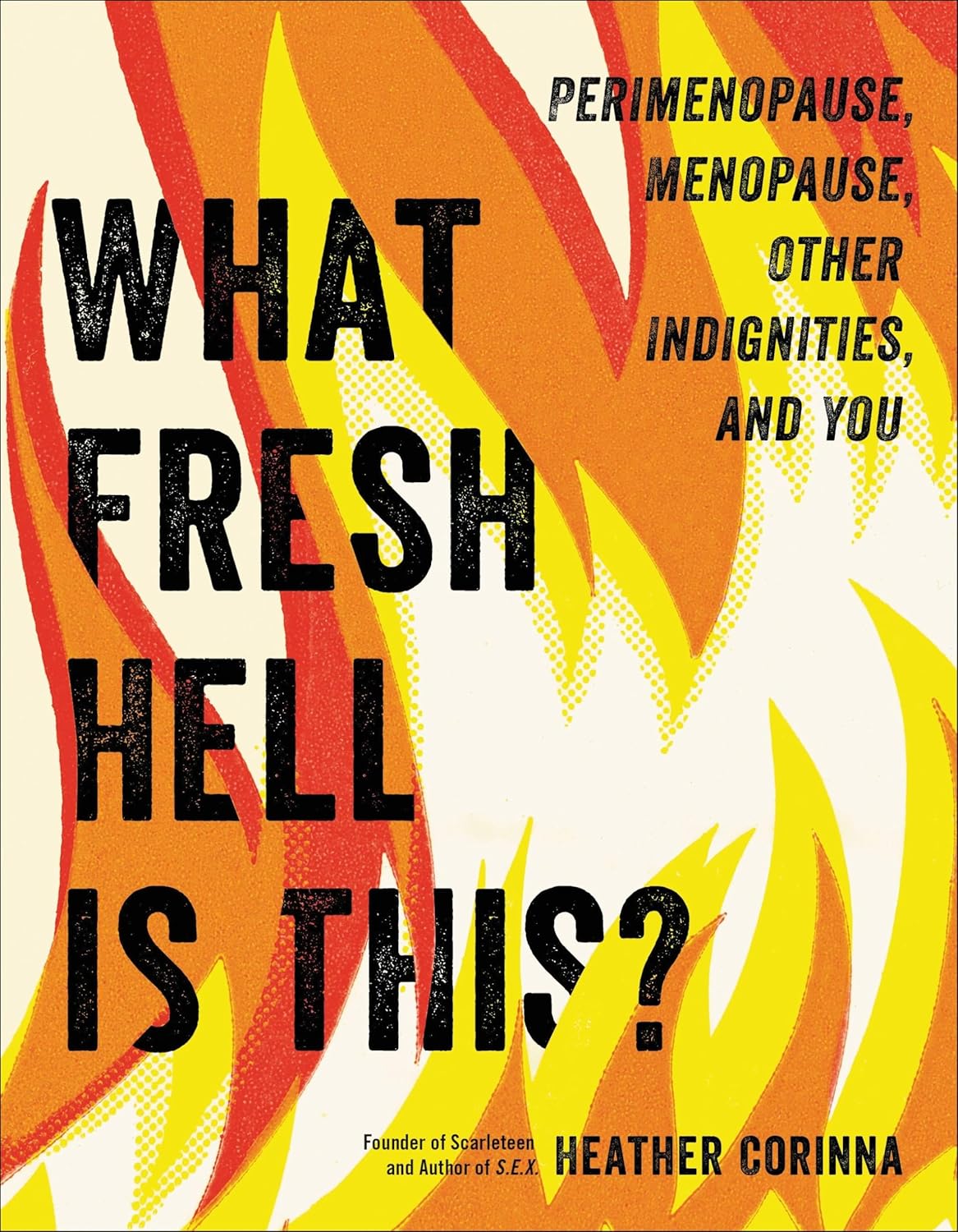
    What Fresh Hell Is This? by Heather Corinna

    There is nothing dainty or demure about Heather Corinna’s treatment of menopause. This empowering resource is for those who feel their bodies are shape-shifting without warning and who want answers without condescension.

    Part field guide, part memoir-manifesto, What Fresh Hell Is This? is appropriately inclusive, particularly of queer, nonbinary, and gender-expansive readers. It is also unflinchingly honest about what it’s like to wake up in a body suddenly thick with uncertainty, rage, and night sweats.

    Corinna doesn’t tidy the realities of hormonal shifts, libido changes, insomnia, “menopause brain,” or weight gain. Instead, they give them names, contexts, and dignity. Through sex-positive, body-literate writing, they expose how medical systems often ignore perimenopausal symptoms or dismiss them as emotional instability.

    This book pushes back—hard—against gaslighting in the exam room and the cultural script that menopause is simply an absence of estrogen and desire.

    How Corinna Reframes Menopause

    Corinna reframes menopause as a space for autonomy and truth-telling, not for shame or disappearance. They offer practical tools but also political clarity to help readers see how misogyny, heteronormativity, and capitalism shape what we label “disfunction” or “deterioration.” Their work is a lifeline for anyone whose experience doesn’t fit neatly into the mainstream narrative.

    Menopause and Culture by Gabriella Berger

    Long before menopause was a podcast topic or a wellness marketing hook, Gabriella Berger was examining it through a sociological lens. Years later, Menopause and Culture is still a foundational text in understanding how gender, class, and race shape a person’s menopausal experience and how these intersecting forces determine whether one’s symptoms are medicalized, moralized, or ignored entirely.

    Berger’s work insists that menopause cannot be understood in isolation from its cultural frame. Why are hot flashes pathologized in some societies and spiritualized in others? What does it mean when hormonal changes are treated as personal failure rather than natural progression?

    Berger explores these questions not through self-help, but through careful ethnographic study and social critique. This text helps women and others who experience menopause understand how deeply their experiences are shaped by systems they didn’t choose.

    How Berger Reframes Menopause

    Berger reframes menopause not as an issue of illness, but of interpretation. Her work restores complexity to a stage of life often reduced to mood swings and medical charts.

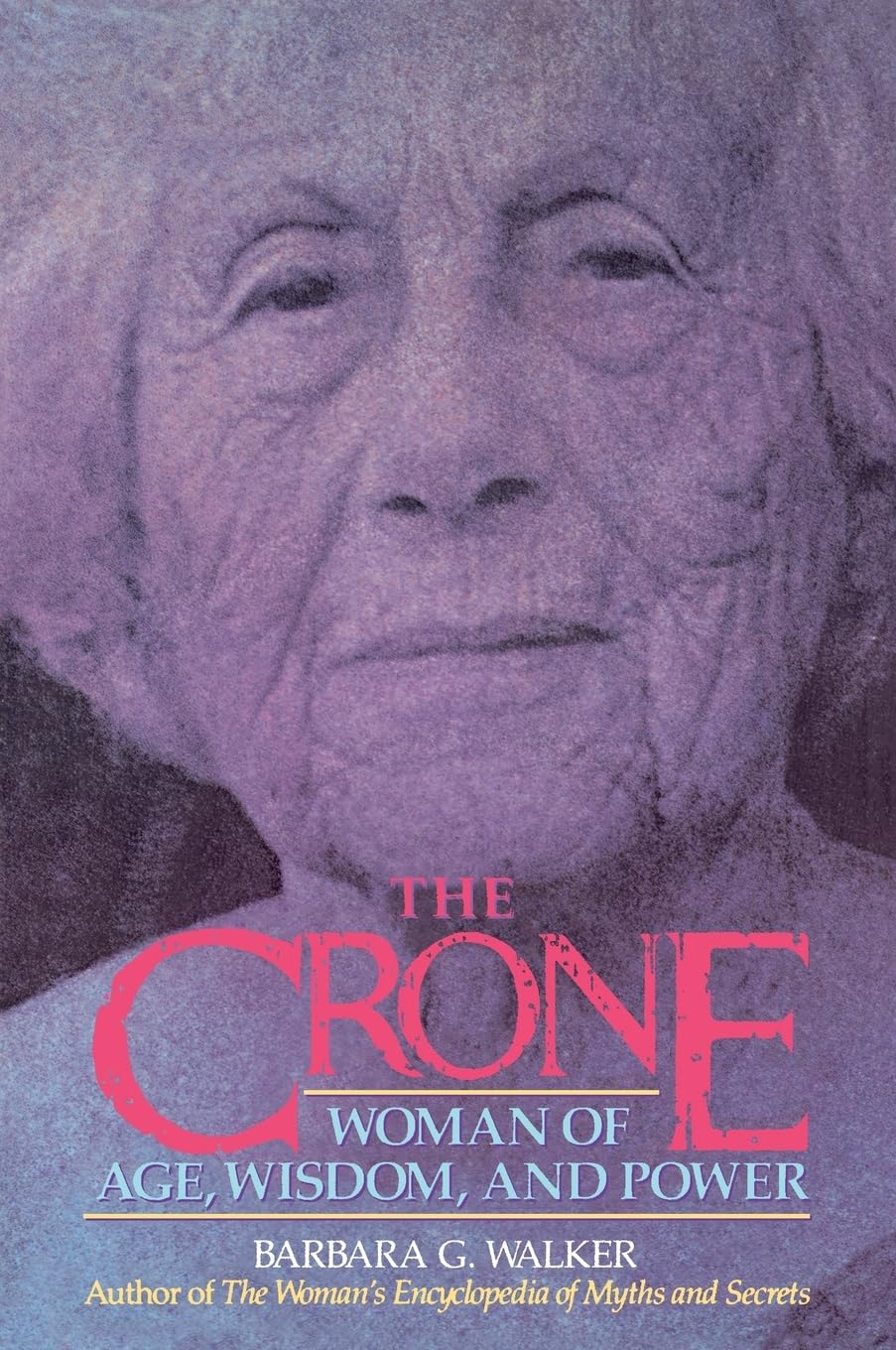
    Crone: Women Coming of Age by Barbara G. Walker

    Unlike other books on the subject, Barbara G. Walker’s Crone reads less like a roadmap and more like a reclamation—of time, body, and mind. In our Western culture where women past midlife are often erased, diminished, or flattened, Walker grants aging power. Her essays challenge the idea that worth ends with waning fertility, that post-menopausal bodies are anything less than potent, or that women’s mental health deserves no attention after 50.

    Drawing on mythology, feminist critique, and historical analysis, Walker reclaims the archetype of the “crone” as a figure of wisdom, clarity, and independence. She doesn’t downplay the discomfort of aging—the hot flashes, hormonal fluctuations, or emotional volatility—but she situates these changes within a broader philosophical shift. Walker offers us a “new menopause.”

    How Walker Reframes Menopause

    Walker’s work offers emotional resonance and cultural validation, particularly for readers seeking to reframe the menopausal transition as shifting instead of shrinking.

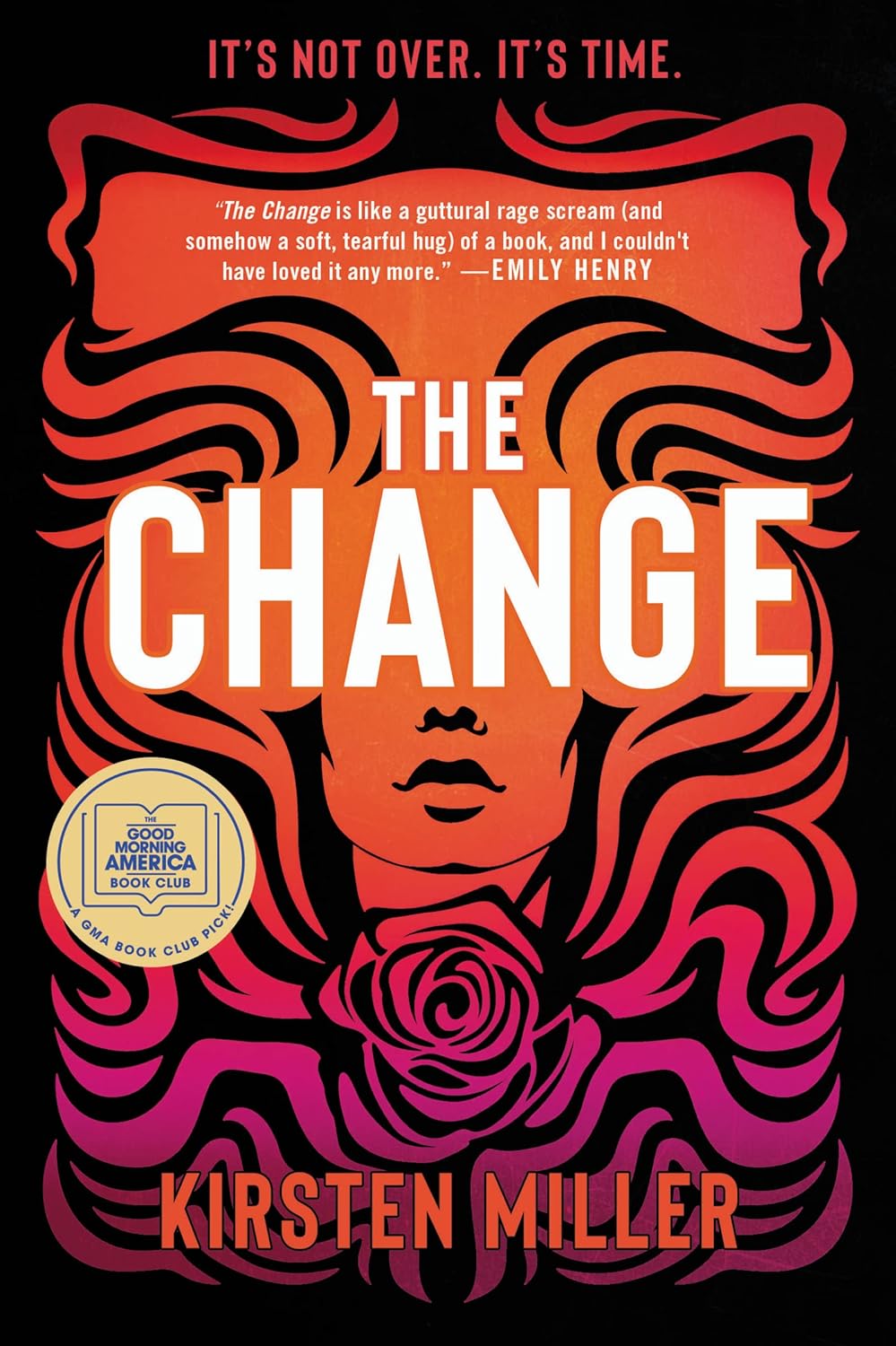
    The Change by Kirsten Miller

    A supernatural feminist thriller about post-menopausal women reclaiming power, The Change is culturally subversive and fun. Kirsten Miller’s genre-defying novel leans into the wild potential of post-menopausal life, both literal and mythic. She gives those hormonal shifts witchy power instead of viewing them as society does—a descent toward death.

    Her story follows three women in midlife who, freed from the constraints of their younger selves, discover new, otherworldly abilities that connect them to rage, justice, and one another. The novel never flinches from the realities of menopause—weight gain, insomnia, mood swings, the bodily betrayals that come without warning—but it refuses to treat those realities as shameful or passive. Instead, it treats them as fuel.

    How Miller Reframes Menopause

    Miller reframes menopause as catalytic. Her novel speaks not to symptom relief, but to the cultural hunger for stories where aging women are agents of change, not its casualties. This type of menopause care might not come from a women’s health clinic, but it certainly is a salve!

    The Meanings of Menopause: Historical, Medical, and Cultural Perspectives, edited by Ruth R. Formanek

    this book on menopause navigating your path through midlife wellness; not by a medical oncologist or menopause specialist

    This interdisciplinary anthology doesn’t prize ease or brevity; it aims for depth. The Meanings of Menopause gathers essays from across disciplines—anthropology, psychology, history, and feminist theory—to show that what we call “menopause” is neither biologically fixed nor culturally consistent.

    Through its many voices, the collection makes clear that the way we interpret hot flashes, hormonal shifts, and aging bodies has far more to do with social context than science alone. While science empowers women, she also argues that the limited definition tendered by our Western medical community is not at all sufficient. Some essays trace the medicalization of menopause (from changes in women’s brain health to the panoply of hormone replacement therapy prescriptions) in Western medicine, while others compare global traditions that treat the menopausal transition as a new phase of life rather than a mourn-able loss.

    How Formanek’s Anthology Reframes Menopause

    Rather than presenting a unified thesis, Formanek and her contributors offer a kaleidoscope of cultural narratives. This book gives readers intellectual scaffolding, that, upon scaling, reveals how deeply our understanding of menopause is shaped by politics, language, and history.

    Reinterpreting Menopause: Cultural and Philosophical Issues, edited by Komesaroff, Rothfield, and Daly

    explore women's reproductive health in this menopause book by Komesaroff; it might be just what you need to understand this life stage and chart your path through hormonal change

    Though not a replacement for scientific menopause education, this book explores the ethics, identity, cultural construction of the aging female body. Reinterpreting Menopause is a dense and layered text that asks how the medical community, the media, and even women’s health clinics have shaped our most intimate understandings of menopause and the body.

    These essays resist the “deficiency” and “decline” language that so often saturates conversations about hormone therapy. Hell, you might even hear that verbage from an actual menopause specialist. Instead, they invite readers—especially menopause experts, social psychologists, and clinicians—to reconsider what counts as “normal” for people experiencing menopause.

    How the Editors Reframe Menopause

    This collection reframes the menopause transition. It offers mental health professionals and philosophers alike a structure to critique dominant narratives and to imagine menopause care that is responsive, curious, and respectful of difference.

    Flash Count Diary: Menopause and the Vindication of Natural Life by Darcey Steinke

    Darcey Steinke’s Flash Count Diary is raw, impressionistic, and unapologetically personal. Steinke does not flinch from the hardest parts: the brain fog, the night sweats, the hormonal changes, the sexual wellness issues. But neither does she flatten menopausal and perimenopause symptoms into clinical bullet points.

    Instead, she writes through them. For Steinke, memoir is inquiry. She weaves in interviews with orcas and elephants—species whose females also hit menopause—and muses on desire, death, and transformation. She speaks to the mental health toll of early menopause (society often ignores it), the increased risk of cardiovascular disease, the grief that can arrive in the wake of a shifting sex life, and the silence surrounding it all.

    How Steinke Reframes Menopause

    Steinke reframes menopause as a state of reckoning. This book is perfect for readers feeling gaslit in their doctor’s office or skeptical of one-size-fits-all lifestyle changes like the Galveston Diet. It’s not a definitive guide, but it is a luminous one.

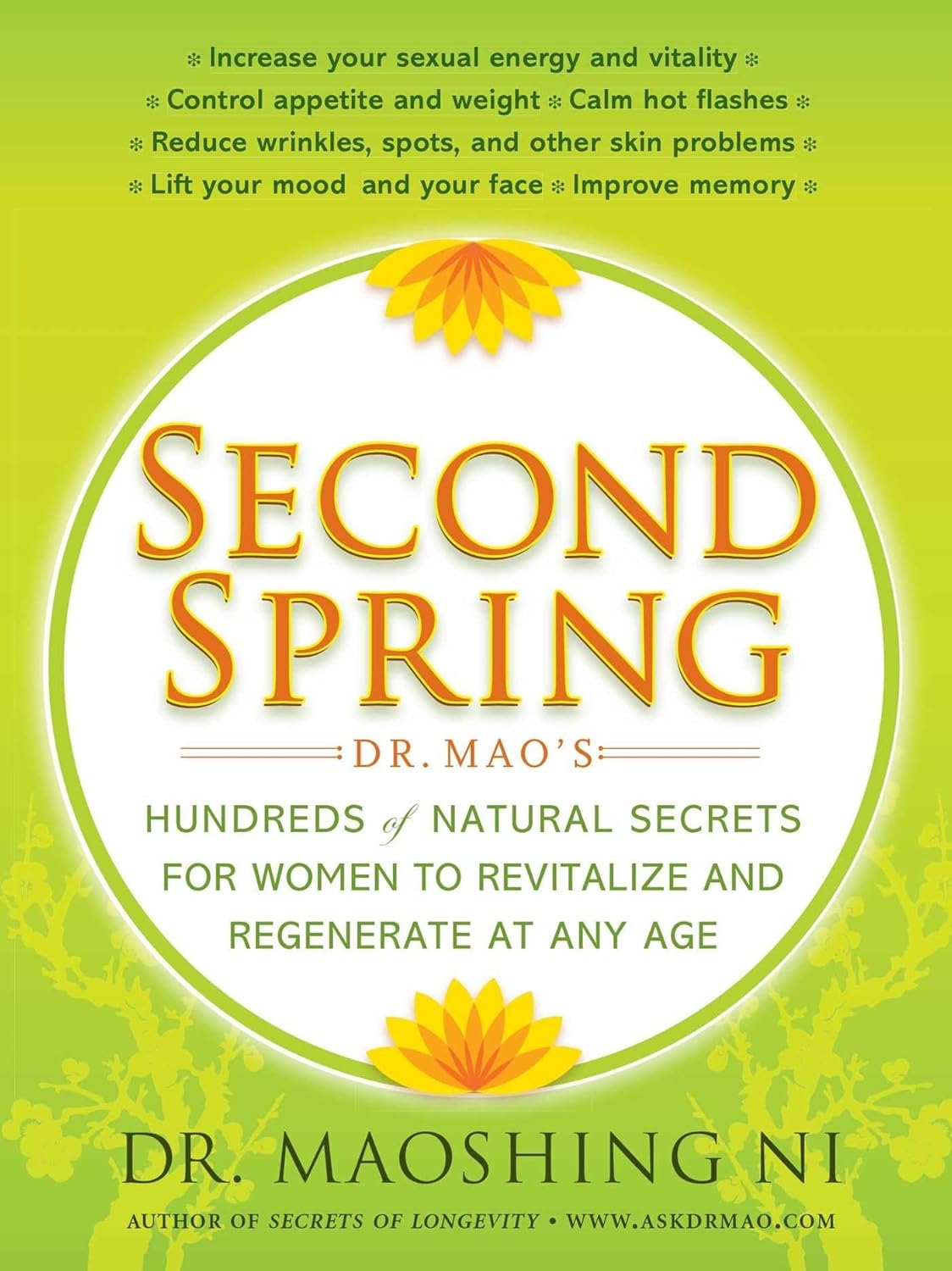
    Second Spring: Dr. Mao’s Guide to Reviving Female Sexuality and Vibrancy Naturally by Dr. Maoshing Ni

    For women navigating the often-overmedicalized terrain of menopause, Second Spring offers a gentler, deeper path that is rooted not in pharmaceuticals but in traditional Chinese medicine and holistic care. A 38th-generation practitioner, Dr. Maoshing Ni implores readers to consider that what we call decline might actually be rebirth: a second spring in the seasons of our lives.

    This book addresses the realities of common symptoms—hot flashes, brain fog, mood swings, vaginal dryness, low libido, joint pain, and weight gain—but does so through a lens of harmony instead of crisis. Dr. Ni provides practical advice grounded in centuries-old traditions: herbal remedies, acupressure, movement practices like qi gong, and dietary shifts designed to support women’s hormonal health, sexual wellness, and mental health through the menopausal transition.

    Unlike most books that treat menopause as a problem to be solved by a menopause specialist, a pill, or a women’s health clinic, Second Spring prioritizes balance. Dr. Ni’s approach honors women’s brain health, cardiovascular wellness, and cognitive function, but also the spiritual and emotional realignment that often arises at midlife.

    How Dr. Ni Reframes Menopause

    Dr. Ni reframes menopause as an invitation to slow down, to reflect, and to listen to what the body is asking for rather than trying to suppress or fix it. Instead of conventional Western medicine approaches to menopause management, Dr. Ni poses a rhythmic, reverent, and culturally rich alternative.

    The Menopause Manifesto by Dr. Jen Gunter

    If Walker frames menopause spiritually, Dr. Jen Gunter delivers a sharp scientific perspective. Known for her no-nonsense writing and advocacy for evidence-based women’s health, Gunter’s The Menopause Manifestois exactly what its title suggests. Grounded in the latest research and the realities of clinical practice, the book dismantles medical myths and gives readers the menopause education many of us never got.

    From perimenopause symptoms to hormone replacement therapy, from sexual wellness to breast cancer risk, Gunter lays out what we know, what we assume, and what still needs to be studied. She makes space for conversations around our evolving health, all while naming the shame and neglect that often shape menopause care in today’s healthcare system.

    Reframing Menopause in Your Own Words—in Your Own Time

    other women sex ed many women pivotal transition sexual issues world renowned neuroscientist staying healthy heart disease treatment options mood changes Still life with books and candle, 1890, 45×38 cm by Henri ...
    The Nymph of Spring, Lucas Cranach the Elder, Oil on Panel, After 1537

    In recent years, menopause has started shedding the skin that Western medicine has made it wear, in part due to impactful women like Michelle Obama, Oprah Winfrey, and Naomi Watts, who have shared personal experiences and advocated for better awareness, research, and care.

    Podcasts, documentaries, books like The New Menopause by Mary Claire Haver, and platforms like Alloy Women’s Health are giving midlife women the tools they need. Our shared hope is that perimenopause and menopause are no longer just endured, but understood. We hope that you will reframe menopause in your own words, on your own time, knowing that this transition is worthy of attention, resources, and language that reflects the full spectrum of that experience.


    Reframing Menopause at The Somatic Diary

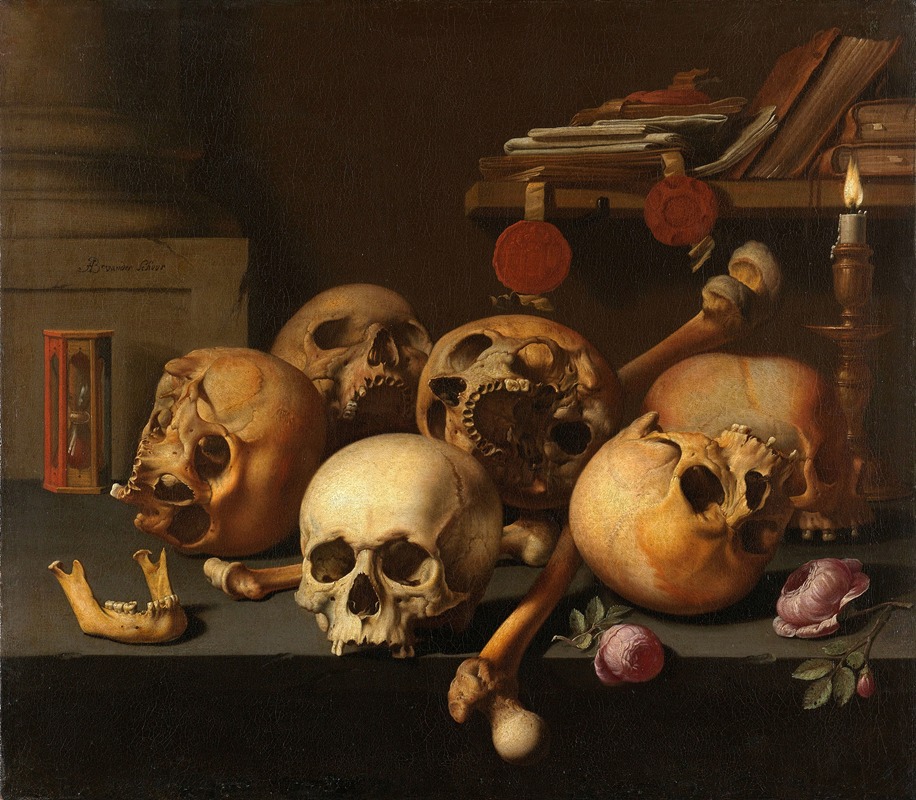
    memento mori as an allegory for menopause (Books)
    The memento mori painting above feels like an allegory for menopause: a dichotomy between death and a “new spring.”

    The Somatic Diary is devoted to the mind-body connection. It was born out of one woman’s realization that her body had been narrating her life all along: through pain, shame, resilience, and change.

    In all its unpredictability and “mystery,” we see menopause for what it is: an important, vital chapter in women’s lives. For many of us, it is a reckoning with identity, desire, and aging.

    Our stories matter, our bodies matter, and healing starts when we listen to both.