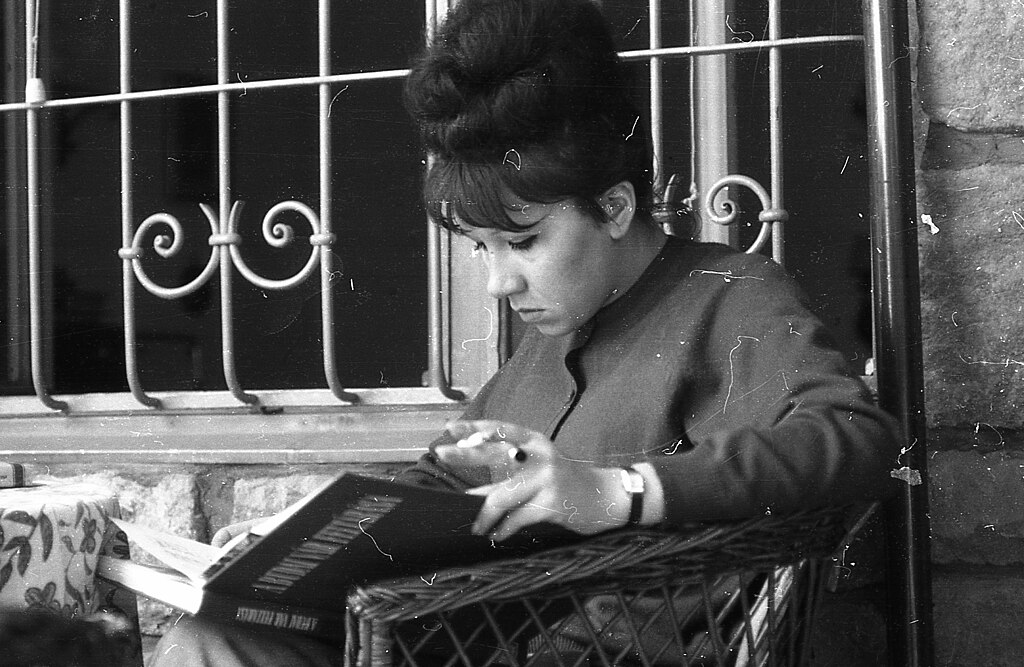
When we talk about a somatic practice, we don’t often think about the act of reading. But reading is more than a cerebral exercise. Somatic reading can involve your entire body and mind. It can even extend your life.
Studies have shown that immersive narratives can:
- Regulate your heart rate
- Improve your ability to understand the emotions of other people
- Lower your stress
- Increase your life by roughly two years
At the Somatic Diary, reading and writing are at the heart of what brings us back to ourselves. We see reading (and audiobooks definitely count) as a practical way to enrich both your body and mind.
When you read slowly and with intention, your nervous system has the opportunity to settle. By paying attention to your breath, your posture, and the way sentences feel within your body, you’re using reading as a mindfulness exercise.
While it cannot, and should not, replace therapy, medication, or other medical care, reading is a great complement to a well-rounded and healthy life.
Reading as Therapy: Where It All Began
The idea that books can function as therapeutic tools is not new. It’s just evolved over time to what we know it as today.
Ancient Reverence for the Healing Art of Reading
As far back as the 13th Century BCE, the Egyptian pharaoh, Ramses II, reportedly had the phrase “The House of Healing for the Soul” inscribed at the doorway of his personal library, suggesting that the ancients viewed reading as medicine (despite the fact that more than 90% of the population was illiterate).
For the ancient Greeks, the god Apollo was the patron of medicine, but also of poetry, music, and the arts.
That early intuition—that stories can steady the inner life—keeps resurfacing across cultures.
You see it in Buddhism, where reading sacred texts and sutras is essential to developing a deeper spiritual practice. This reading must be performed with mindfulness, observing the thoughts and feelings that arise while reading each passage, in order to cultivate a better mind-body connection.
The Western World’s Approach to Reading for Wellbeing
Centuries on, Western medicine picked up on reading as a path to healing for the mentally ill. In the 19th century, physician and Founding Father, Benjamin Rush, encouraged reading as a treatment for mental distress, prescribing what he deemed high-focused genres (history, travel, fiction) to anchor attention and temper intrusive thoughts. The so-called “Father of American Psychiatry”, however, also promoted bloodletting, mercury treatments, and his own invention, the tranquilizer chair, so we must consider his contribution to be the very early stages of where we are today.
We come into the 20th Century all tongue-in-cheek: minister Samuel McChord Crothers published a satirical essay in The Atlantic, where he coined the term bibliotherapy. He imagined a clinic where patients were“treated” with curated book recommendations, not unlike BookTok today. The joke gave rise to more modern approaches.
By the 1950s, the concept was getting professional support. Psychologist Caroline Shrodes asserted that stories gave the opportunity for “vicarious experience,” allowing the reader a safe emotional release. By identifying with certain characters or situations, a reader might feel sympathy, compassion, or even disgust. These realizations are made easier and more objective through the simple act of reading.
With that bridge from anecdote to method, bibliotherapy moved from a satirical idea to a practice researchers could test and clinicians could repeat.

Bibliotherapy: What Does the Research Say?
Recent studies suggest fiction can calm the nervous system, gently instill empathy, and potentially lead to a longer life. Let’s look at the studies:
Fiction Improves Your Ability to “Read the Room”
Social cognition is your brain’s ability for awareness and emotional cues. It’s how you notice, interpret, and respond to other people.
In a 2018 meta-analysis of 14 different studies, researchers concluded that readers of fiction showed a small, but reliable improvement in social-cognitive performance.
Then, in 2024, another meta-analysis came to much the same finding: reading fiction enables you to read people (including yourself) better. Your capacity for empathy is increased. Your ability to understand different perspectives is made more available.
A Heart Beats to the Rhythm of the Story
While not exclusive to reading, immersive stories (in books, on TV, or in movies) can influence the heart. In 2024, a group of psychologists in the UK split a TV program into two versions: one audio-only and the other visual-only. They discovered that study participants experienced heart synchronization with both versions. This means their heart rates sped up or slowed down at the same points in the story.
What this suggests is that people aren’t moved solely by imagery. Humans are drawn to stories, moved by them, and are often impacted by them collectively in similar ways. Stories stimulate engagement, stirring our bodies to the beat of the plot.
Shared Reading Improves Quality of Life
Good news for book clubs. The experience of shared reading can improve well-being, lead to better sleep, and reduce feelings of depression.
These are big claims, supported by 15 English-language studies examined in Sweden in the spring of 2025. “Participants were mostly vulnerable populations such as people with dementia, mental illness, or chronic pain.” The group reading sessions lasted 1-2 hours and were led by a facilitator.
Participants reported a “renewed sense of identity” and increased feelings of well-being, with lower depressive symptoms. Although the studies are few and the sample sizes are small, these studies are optimistic about the effects of reading on mental health.
It should be noted that the community aspect of group-based reading was also a major factor in what participants felt.
Reading is Linked to Longevity
In a large U.S. study of adults over the age of 50, people who read books for about 30 minutes a day had a 20% lower chance of dying over the next 12 years, compared to non-book readers. That amounts to roughly two extra years of life.
Additionally, the findings “demonstrated that any level of book reading gave a significantly stronger survival advantage” than reading magazines or newspapers. And these results were consistent across sex, race, education, and socio-economic status.
A similar study was conducted in China and published in February 2025. Over 10,000 elderly participants with noted cognitive impairment were followed for ten years. Activities meant to improve cognitive ability (e.g., reading books, playing mah-jong, watching TV, or listening to the radio), were shown to lower the risk of death, proving that keeping the mind sharp can positively impact longevity.
The Somatic Reading Approach
When you read, your body activates. Your eyes scan the words, your brain’s language centers fire, and your prefrontal cortex keeps you focused line-by-line. Audiobooks engage the same cerebral processes through the ears. Or, at least, that’s what’s supposed to happen.
Look, we’ve all been there: re-reading the same three sentences, locked in a battle of attention with whatever else is going on inside our busy minds. Are we immersed in the story? Are we reaping the benefits of all reading has to offer?
This is NOT a case for optimizing your reading ability. Nor is this a suggestion for growth hacking your cognition. Reading for enjoyment alone, however you choose to do it, has benefits whether the studies support it or not. If reading makes you feel better, you should do it. Full stop.
But if you are interested in trying somatic reading, here are a few prompts to get you started.

Bring Your Shoulders Down – Poetry Prompt
If you’ve ever been to a yoga class, you’ll often hear the phrase “pull your shoulders away from your ears.” In yoga, it is commonly discussed that tension stagnates in our joints, especially our shoulders and hips. This prompt makes you aware of that tension as you read poetry.
The prompt: Read a poem, slowly. Mark the one line that makes your shoulders loosen. Reread it on a long exhale, paying special attention to how your shoulders feel.
Why this works: When we follow a story closely, our heart rates rise and fall with the conflict and the emotion of the narrative. Slower heart rates are associated with calm. By staying present in your body, especially through times of tension, you can address the distress with focused breathing, which can lower your heart rate.
Put Yourself in Another’s Shoes – Fiction Prompt
Sometimes our lives are ruled by judgments. But without understanding or having compassion for another person’s complicated, inner life, we lose out on a deeper connection to ourselves. Dismissing someone limits our own ability to be curious, to experience the nuances of life. It’s important to acknowledge that other people think, behave, and react in different ways.
The prompt: After an emotional scene or situation, ask yourself: “If I were this character, what would I want to happen next?” Then ask: “If I met this character, how would they describe the real me?”
Why this works: Studies have shown that reading fiction helps foster empathy for other people, which can lead to better connections with people in real life.
Circle What Doesn’t Belong – Poetry Visualization Prompt
Trauma survivors often seek therapy to gain control over their lives. It’s a big reason why I sought it out. My anxiety was making me feel out of control. And to understand why my everyday life was causing me so much distress, I had to take a long, hard look at why I was reacting in such troublesome ways. What I learned in therapy was that telling my story, even to just my therapist, helped me regain agency over my life. I needed to make sense of what happened in order to move past it.
The prompt: Select a highly visual piece of poetry. Prose can work, but it must be vivid. Underline the passage that you saw clearly in your mind. Close your eyes for 10 seconds and find where it lands (your throat, sternum, belly, etc.). Put a hand there and tell yourself, “you are okay. You are okay here.”
Why it works: It’s powerful when your mind can read or hear words and then translate them into powerful imagery. Narratives organize sensation and emotion, helping you make sense of the world around you. The same “shared rhythm” that shows up in heart-rate synchrony can help you identify feelings in your body and give them meaning.
Not the Last Word on Somatic Reading
Somatic reading turns what we love into a therapeutic exercise. Again, this isn’t a promotion of growth hacking/habit stacking/optimizing your hobbies. This is only a recommendation that you can follow if you are hoping to experience reading as a therapeutic exercise.
As readers, we know that fiction is more than entertainment. It’s more than an escape. It’s a way to better understand our world and ourselves. The science says the benefits are real, but the research is still slim. Not that we need anything else to support our love of books.
That’s the practice: enjoying something you already love within the context of a mind-body connection. It’s not perfect, but it works if you pay attention to it.


