
In Western culture, we see menopause as an ending. It arrives not with reverence but with euphemism, clinical dread, or silence—a slow erasure wrapped in hot flashes and unkind jokes about uncontrollable mood swings. But like all life thresholds, menopause is multifaceted—neither wholly psychological nor entirely physical. It is biography, biology, and belief. It is medicine. It is myth. It is a nexus of power, aging, identity, and rage.
The books below do not explain menopause in a clinical sense, but they do reframe it. They interrogate the structures that turned it into a punchline, reimagine it as metamorphosis, and invite us to reinterpret what it means—culturally, spiritually, politically—to inhabit a body that no longer conforms to the (not-so-reliable) rhythms it once did. Yes, they address menopause symptoms like weight gain and waning estrogen, but they also re-contextualize women’s health at—and beyond—this crucial juncture.
Whether through memoir, manifesto, fiction, or anthropology, these ten works resist our cultural inclination to flatten menopause. They insist that menopause is not the death of youth, but a fresh chapter of womanhood.
10 Books That Reframe Menopause in Cultural Context
The Slow Moon Climbs: The Science, History, and Meaning of Menopause by Susan Mattern

The first menopause book on this list is The Slow Moon Climbs. Countering the pathology and pity that frequently defines coverage of this subject, Mattern’s voice is clear and corrective. A medical historian by training, she dismantles the “decline narrative” with precision and scope.
Mattern argues that menopause is not an evolutionary fluke but a biological and social asset. Her writing is lucid, quietly persuasive, and steeped in global anthropology. By tracing menopause through centuries of human development and across cultures—from ancient China to contemporary Western medicine—Mattern reframes it as a meaningful adaptation rather than a malfunction.
Readers will find no recipes, hormone therapy recommendations, or symptom trackers here, but they may step away with something rarer: relief. Nothing about this transition is unnatural. We were never meant to navigate menopause in shame or isolation.
How Mattern Reframes Menopause
Rather than offering practical advice on managing symptoms or presenting studies on women’s hormonal health, Mattern gives readers historical context, intellectual clarity, and cultural validation. Her work grants women permission to locate themselves within a longer lineage, one in which the aging female body is not in decline, but in continuity with generations of women whose bodies were never the problem.
What Fresh Hell Is This? by Heather Corinna
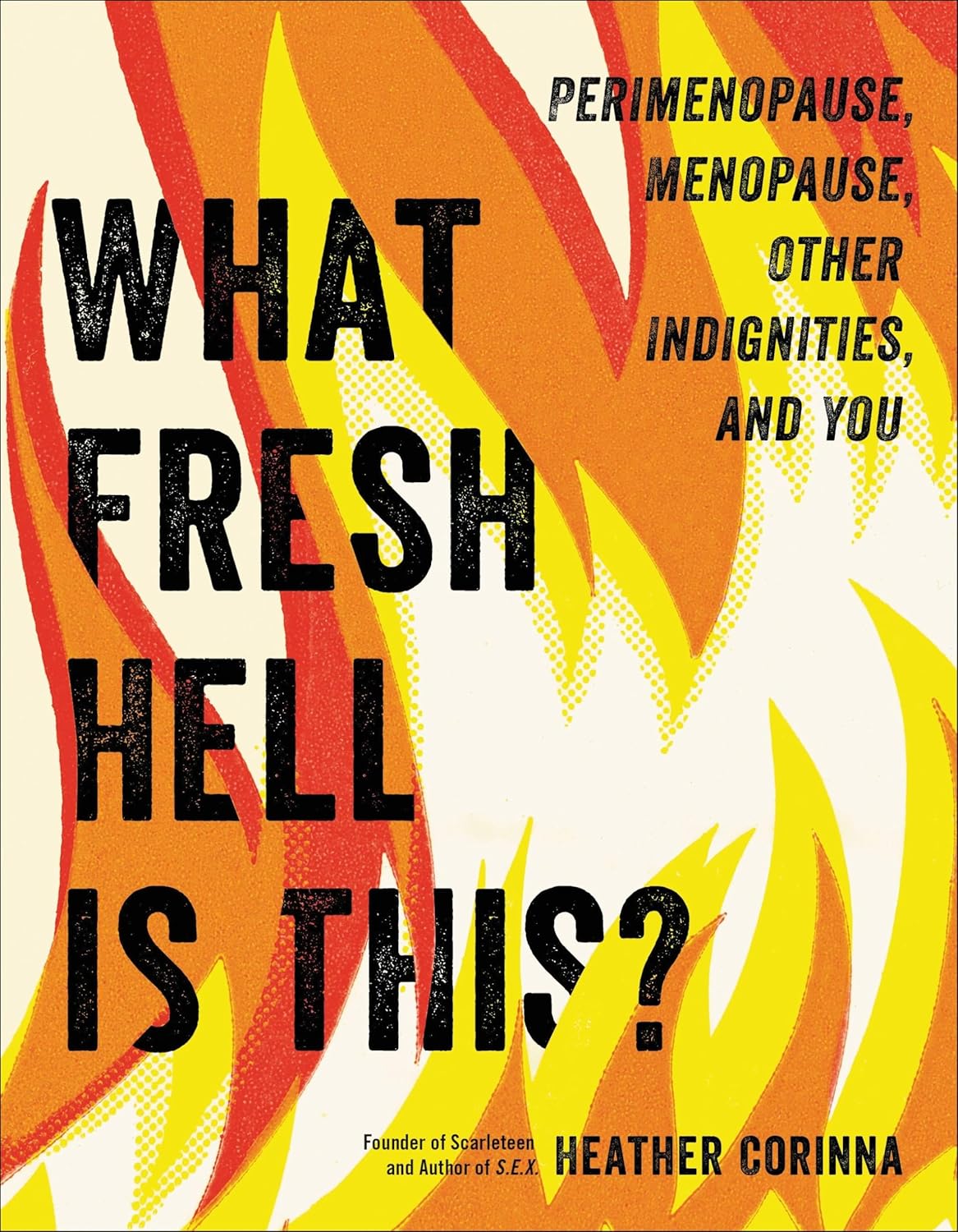
There is nothing dainty or demure about Heather Corinna’s treatment of menopause. This empowering resource is for those who feel their bodies are shape-shifting without warning and who want answers without condescension.
Part field guide, part memoir-manifesto, What Fresh Hell Is This? is appropriately inclusive, particularly of queer, nonbinary, and gender-expansive readers. It is also unflinchingly honest about what it’s like to wake up in a body suddenly thick with uncertainty, rage, and night sweats.
Corinna doesn’t tidy the realities of hormonal shifts, libido changes, insomnia, “menopause brain,” or weight gain. Instead, they give them names, contexts, and dignity. Through sex-positive, body-literate writing, they expose how medical systems often ignore perimenopausal symptoms or dismiss them as emotional instability.
This book pushes back—hard—against gaslighting in the exam room and the cultural script that menopause is simply an absence of estrogen and desire.
How Corinna Reframes Menopause
Corinna reframes menopause as a space for autonomy and truth-telling, not for shame or disappearance. They offer practical tools but also political clarity to help readers see how misogyny, heteronormativity, and capitalism shape what we label “disfunction” or “deterioration.” Their work is a lifeline for anyone whose experience doesn’t fit neatly into the mainstream narrative.
Menopause and Culture by Gabriella Berger
Long before menopause was a podcast topic or a wellness marketing hook, Gabriella Berger was examining it through a sociological lens. Years later, Menopause and Culture is still a foundational text in understanding how gender, class, and race shape a person’s menopausal experience and how these intersecting forces determine whether one’s symptoms are medicalized, moralized, or ignored entirely.
Berger’s work insists that menopause cannot be understood in isolation from its cultural frame. Why are hot flashes pathologized in some societies and spiritualized in others? What does it mean when hormonal changes are treated as personal failure rather than natural progression?
Berger explores these questions not through self-help, but through careful ethnographic study and social critique. This text helps women and others who experience menopause understand how deeply their experiences are shaped by systems they didn’t choose.
How Berger Reframes Menopause
Berger reframes menopause not as an issue of illness, but of interpretation. Her work restores complexity to a stage of life often reduced to mood swings and medical charts.
Crone: Women Coming of Age by Barbara G. Walker
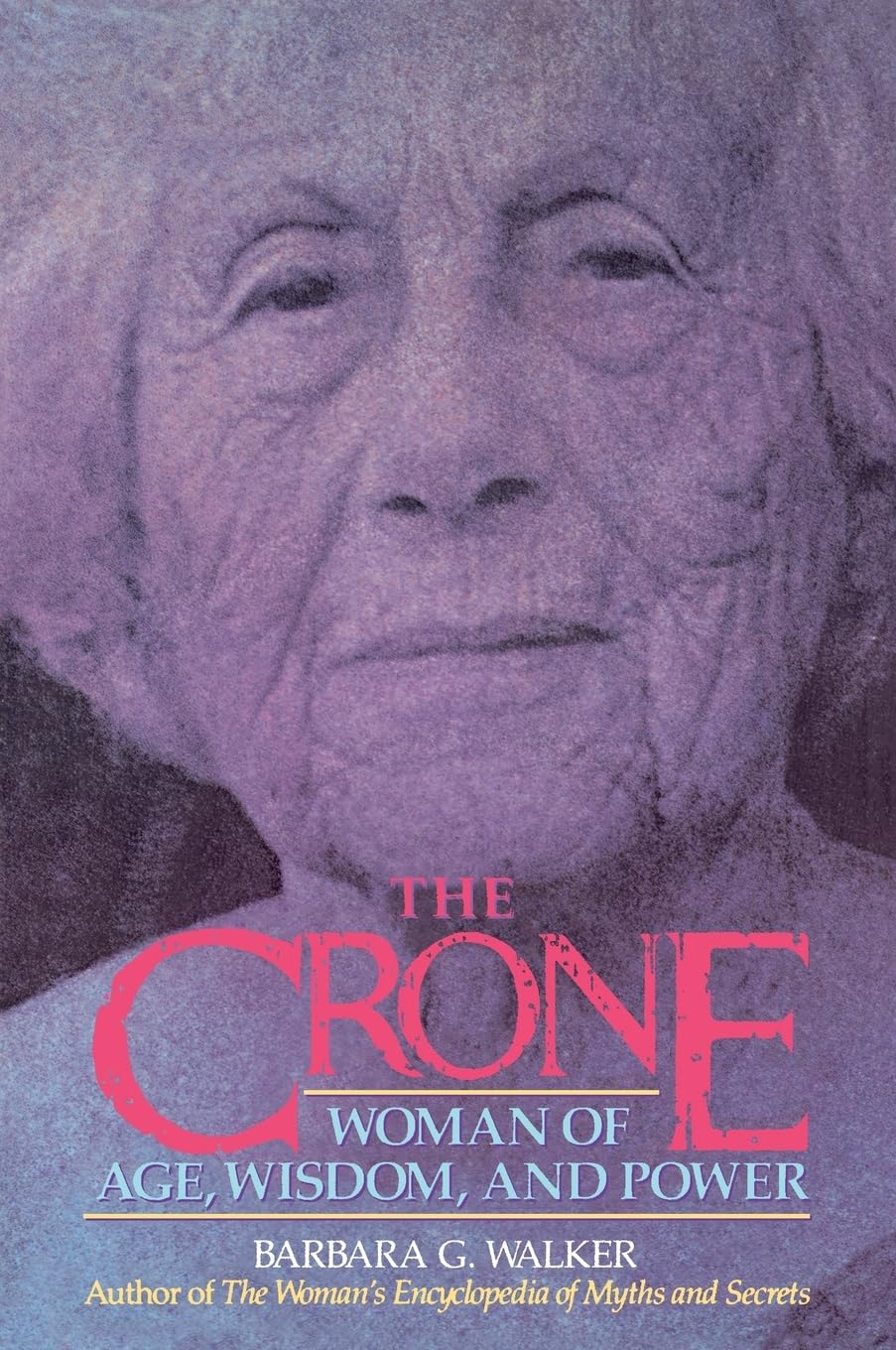
Unlike other books on the subject, Barbara G. Walker’s Crone reads less like a roadmap and more like a reclamation—of time, body, and mind. In our Western culture where women past midlife are often erased, diminished, or flattened, Walker grants aging power. Her essays challenge the idea that worth ends with waning fertility, that post-menopausal bodies are anything less than potent, or that women’s mental health deserves no attention after 50.
Drawing on mythology, feminist critique, and historical analysis, Walker reclaims the archetype of the “crone” as a figure of wisdom, clarity, and independence. She doesn’t downplay the discomfort of aging—the hot flashes, hormonal fluctuations, or emotional volatility—but she situates these changes within a broader philosophical shift. Walker offers us a “new menopause.”
How Walker Reframes Menopause
Walker’s work offers emotional resonance and cultural validation, particularly for readers seeking to reframe the menopausal transition as shifting instead of shrinking.
The Change by Kirsten Miller
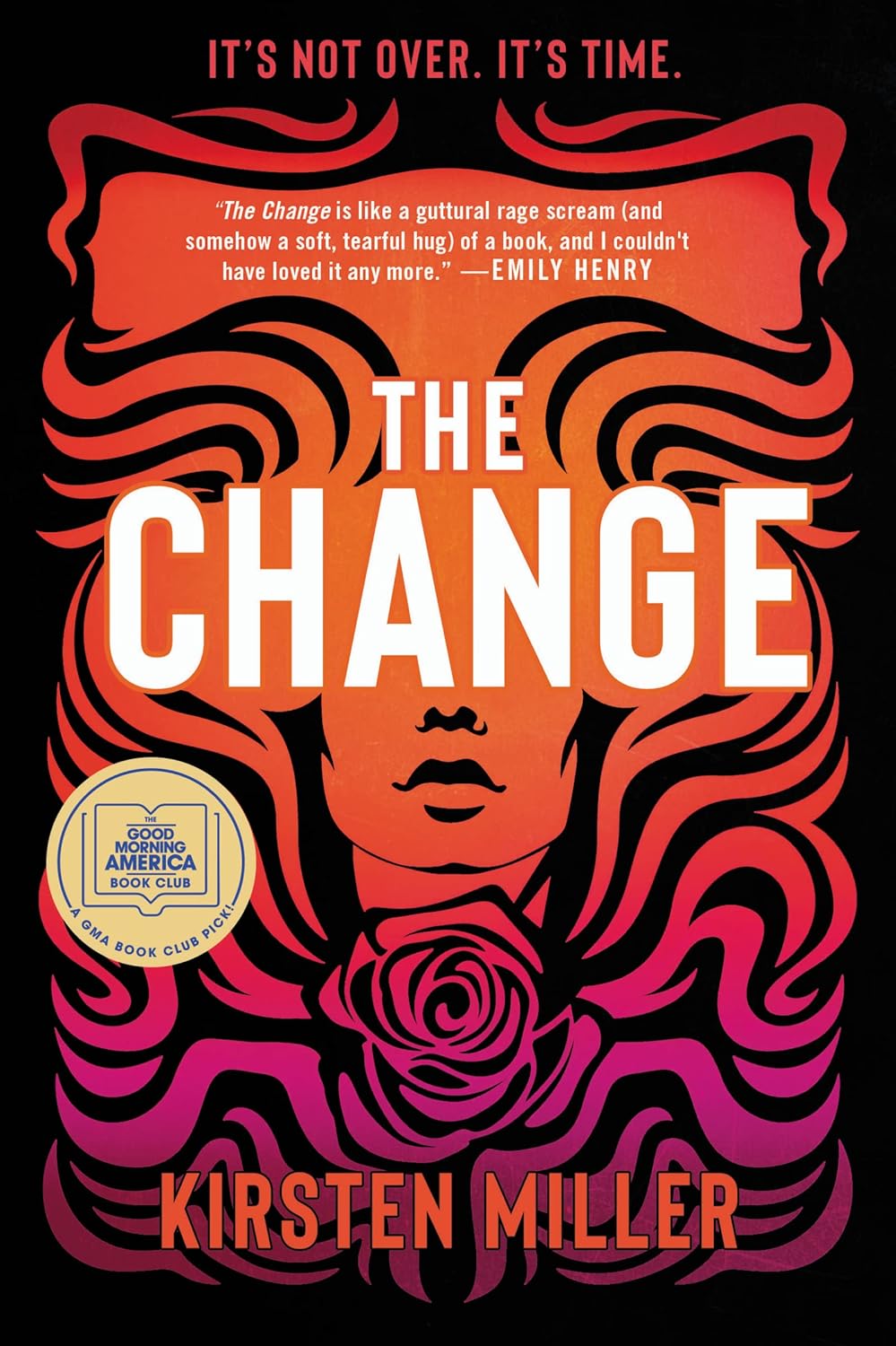
A supernatural feminist thriller about post-menopausal women reclaiming power, The Change is culturally subversive and fun. Kirsten Miller’s genre-defying novel leans into the wild potential of post-menopausal life, both literal and mythic. She gives those hormonal shifts witchy power instead of viewing them as society does—a descent toward death.
Her story follows three women in midlife who, freed from the constraints of their younger selves, discover new, otherworldly abilities that connect them to rage, justice, and one another. The novel never flinches from the realities of menopause—weight gain, insomnia, mood swings, the bodily betrayals that come without warning—but it refuses to treat those realities as shameful or passive. Instead, it treats them as fuel.
How Miller Reframes Menopause
Miller reframes menopause as catalytic. Her novel speaks not to symptom relief, but to the cultural hunger for stories where aging women are agents of change, not its casualties. This type of menopause care might not come from a women’s health clinic, but it certainly is a salve!
The Meanings of Menopause: Historical, Medical, and Cultural Perspectives, edited by Ruth R. Formanek

This interdisciplinary anthology doesn’t prize ease or brevity; it aims for depth. The Meanings of Menopause gathers essays from across disciplines—anthropology, psychology, history, and feminist theory—to show that what we call “menopause” is neither biologically fixed nor culturally consistent.
Through its many voices, the collection makes clear that the way we interpret hot flashes, hormonal shifts, and aging bodies has far more to do with social context than science alone. While science empowers women, she also argues that the limited definition tendered by our Western medical community is not at all sufficient. Some essays trace the medicalization of menopause (from changes in women’s brain health to the panoply of hormone replacement therapy prescriptions) in Western medicine, while others compare global traditions that treat the menopausal transition as a new phase of life rather than a mourn-able loss.
How Formanek’s Anthology Reframes Menopause
Rather than presenting a unified thesis, Formanek and her contributors offer a kaleidoscope of cultural narratives. This book gives readers intellectual scaffolding, that, upon scaling, reveals how deeply our understanding of menopause is shaped by politics, language, and history.
Reinterpreting Menopause: Cultural and Philosophical Issues, edited by Komesaroff, Rothfield, and Daly

Though not a replacement for scientific menopause education, this book explores the ethics, identity, cultural construction of the aging female body. Reinterpreting Menopause is a dense and layered text that asks how the medical community, the media, and even women’s health clinics have shaped our most intimate understandings of menopause and the body.
These essays resist the “deficiency” and “decline” language that so often saturates conversations about hormone therapy. Hell, you might even hear that verbage from an actual menopause specialist. Instead, they invite readers—especially menopause experts, social psychologists, and clinicians—to reconsider what counts as “normal” for people experiencing menopause.
How the Editors Reframe Menopause
This collection reframes the menopause transition. It offers mental health professionals and philosophers alike a structure to critique dominant narratives and to imagine menopause care that is responsive, curious, and respectful of difference.
Flash Count Diary: Menopause and the Vindication of Natural Life by Darcey Steinke

Darcey Steinke’s Flash Count Diary is raw, impressionistic, and unapologetically personal. Steinke does not flinch from the hardest parts: the brain fog, the night sweats, the hormonal changes, the sexual wellness issues. But neither does she flatten menopausal and perimenopause symptoms into clinical bullet points.
Instead, she writes through them. For Steinke, memoir is inquiry. She weaves in interviews with orcas and elephants—species whose females also hit menopause—and muses on desire, death, and transformation. She speaks to the mental health toll of early menopause (society often ignores it), the increased risk of cardiovascular disease, the grief that can arrive in the wake of a shifting sex life, and the silence surrounding it all.
How Steinke Reframes Menopause
Steinke reframes menopause as a state of reckoning. This book is perfect for readers feeling gaslit in their doctor’s office or skeptical of one-size-fits-all lifestyle changes like the Galveston Diet. It’s not a definitive guide, but it is a luminous one.
Second Spring: Dr. Mao’s Guide to Reviving Female Sexuality and Vibrancy Naturally by Dr. Maoshing Ni
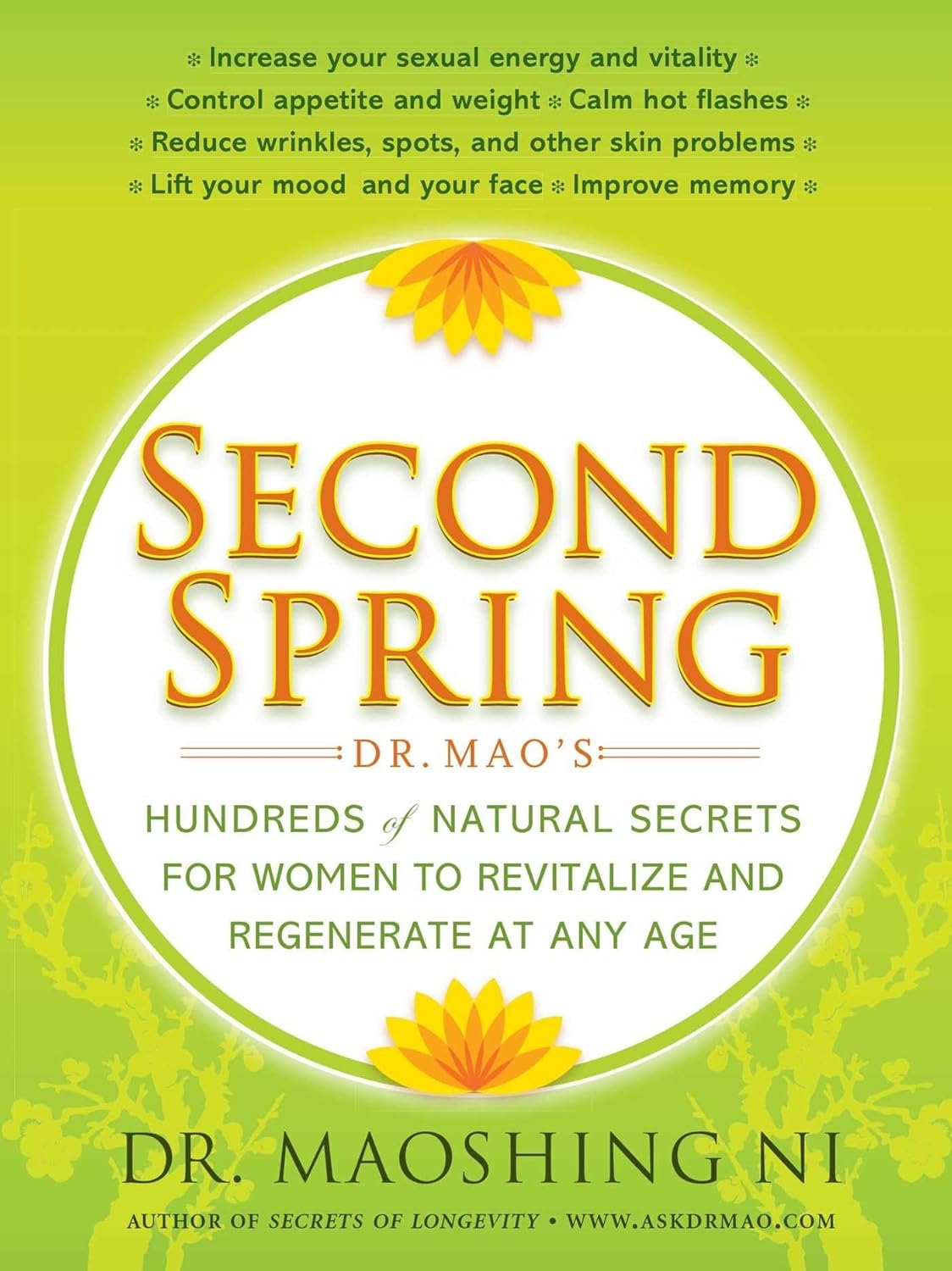
For women navigating the often-overmedicalized terrain of menopause, Second Spring offers a gentler, deeper path that is rooted not in pharmaceuticals but in traditional Chinese medicine and holistic care. A 38th-generation practitioner, Dr. Maoshing Ni implores readers to consider that what we call decline might actually be rebirth: a second spring in the seasons of our lives.
This book addresses the realities of common symptoms—hot flashes, brain fog, mood swings, vaginal dryness, low libido, joint pain, and weight gain—but does so through a lens of harmony instead of crisis. Dr. Ni provides practical advice grounded in centuries-old traditions: herbal remedies, acupressure, movement practices like qi gong, and dietary shifts designed to support women’s hormonal health, sexual wellness, and mental health through the menopausal transition.
Unlike most books that treat menopause as a problem to be solved by a menopause specialist, a pill, or a women’s health clinic, Second Spring prioritizes balance. Dr. Ni’s approach honors women’s brain health, cardiovascular wellness, and cognitive function, but also the spiritual and emotional realignment that often arises at midlife.
How Dr. Ni Reframes Menopause
Dr. Ni reframes menopause as an invitation to slow down, to reflect, and to listen to what the body is asking for rather than trying to suppress or fix it. Instead of conventional Western medicine approaches to menopause management, Dr. Ni poses a rhythmic, reverent, and culturally rich alternative.
The Menopause Manifesto by Dr. Jen Gunter

If Walker frames menopause spiritually, Dr. Jen Gunter delivers a sharp scientific perspective. Known for her no-nonsense writing and advocacy for evidence-based women’s health, Gunter’s The Menopause Manifestois exactly what its title suggests. Grounded in the latest research and the realities of clinical practice, the book dismantles medical myths and gives readers the menopause education many of us never got.
From perimenopause symptoms to hormone replacement therapy, from sexual wellness to breast cancer risk, Gunter lays out what we know, what we assume, and what still needs to be studied. She makes space for conversations around our evolving health, all while naming the shame and neglect that often shape menopause care in today’s healthcare system.
Reframing Menopause in Your Own Words—in Your Own Time

In recent years, menopause has started shedding the skin that Western medicine has made it wear, in part due to impactful women like Michelle Obama, Oprah Winfrey, and Naomi Watts, who have shared personal experiences and advocated for better awareness, research, and care.
Podcasts, documentaries, books like The New Menopause by Mary Claire Haver, and platforms like Alloy Women’s Health are giving midlife women the tools they need. Our shared hope is that perimenopause and menopause are no longer just endured, but understood. We hope that you will reframe menopause in your own words, on your own time, knowing that this transition is worthy of attention, resources, and language that reflects the full spectrum of that experience.
Reframing Menopause at The Somatic Diary

The Somatic Diary is devoted to the mind-body connection. It was born out of one woman’s realization that her body had been narrating her life all along: through pain, shame, resilience, and change.
In all its unpredictability and “mystery,” we see menopause for what it is: an important, vital chapter in women’s lives. For many of us, it is a reckoning with identity, desire, and aging.
Our stories matter, our bodies matter, and healing starts when we listen to both.